1. Invoering
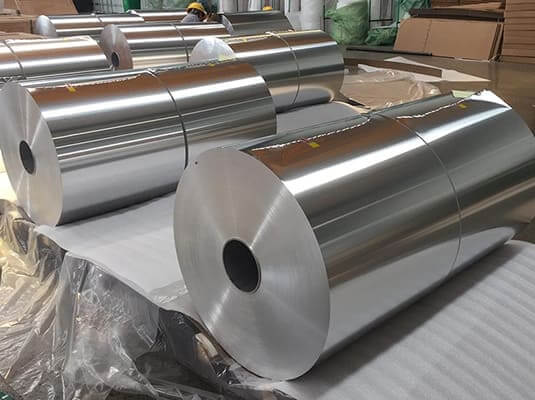
9-micron 1235 composiet aluminiumfolie is een zeer gespecialiseerd bedrijf, multi-layer material that serves as a cornerstone of the modern flexible packaging industry.
This material system is engineered to provide a high-performance barrier at an optimal cost and weight. Its core is an ultra-thin, 9µm (0.009mm) foil made from 1235 aluminium profiel, een hoge zuiverheid (≥99,35% Al) grade prized for its exceptional softness and workability.
While the 9-micron foil itself provides a near-perfect barrier to light, gassen, en vocht, its thinness makes it mechanically fragile and susceptible to pinholes.
These weaknesses are overcome by laminating it with other polymer films (such as PET, BOPP, and PE). The resulting composite structure leverages the absolute barrier of the aluminum core while gaining the strength, afdrukbaarheid, and sealability of the polymer layers.
This makes 9-micron 1235 composite foil the go-to solution for a vast range of applications, inclusief voedselverpakkingen (snacks, koffie, melkpoeder) and pharmaceutical sachets, where a high barrier, lichtgewicht, and cost-effectiveness are all critical requirements.
9-micron 1235 composiet aluminiumfolie
2. Begrip 1235 Aluminium profiel
2.1 Chemische samenstelling
De 1235 aluminiumfolie belongs to the 1xxx series of commercial purity aluminum, specifically engineered for converter foil applications where formability and barrier performance take precedence over structural strength.
The chemical composition adheres to strict limits that maximize rolling efficiency and surface quality.
| Element | Minimum | Maximaal | Functional Role in 9μm Foil |
|---|---|---|---|
| Aluminium (Al) | 99.35% | - | Matrix providing ductility, reflectiviteit, en corrosiebestendigheid |
| Silicium (En) | - | 0.10% | Tight control ensures smooth rolling surface and minimizes inclusion defects |
| Ijzer (Fe) | - | 0.60% | Provides slight strengthening; excessive levels increase pinhole risk |
| Koper (Cu) | - | 0.05% | Kept minimal to preserve electrical conductivity and corrosion resistance |
| Mangaan (Mn) | - | 0.05% | Trace element limited to prevent work hardening |
| Magnesium (mg) | - | 0.05% | Controlled to avoid surface oxidation issues |
| Zink (Zn) | - | 0.10% | Impurity management for anodizing compatibility |
| Titanium (Van) | - | 0.03% | Grain refinement in cast ingots |
| Andere elementen (Elk) | - | 0.03% | Aggregate impurity cap ensuring consistency |
| Andere elementen (Totaal) | - | 0.10% | Overall purity protection |
2.2 Microstructure and Temper
De 1235 alloy achieves its optimal properties through careful thermal processing.
Manufacturers produce 9-micron foil in two primary tempers, each serving distinct converting requirements:
O Temper (Zacht, Gegloeid):
- Treksterkte: 60–90 MPa (8.7–13.0 ksi)
- Opbrengst sterkte: 20–35 MPa (2.9–5.1 ksi)
- Verlenging: 25–35% (A50mm gauge)
- Hardheid: 20–25 HB
- Microstructuur: Fully recrystallized equiaxed grains (ASTM 6–9) with minimal dislocation density
The O temper maximizes ductility for deep drawing, vouwen, and complex forming operations.
The 25–35% elongation enables 9-micron foil to conform to sharp creases in cigarette inner liners and sachet corners without cracking.
This temper also optimizes adhesive wet-out during lamination, as the soft surface conforms to microscopic surface irregularities in plastic films.
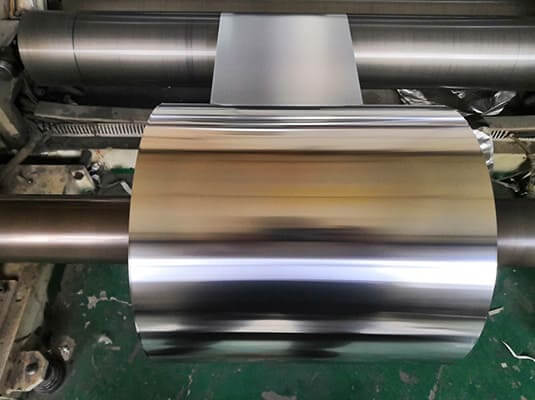
9-micron 1235 H18 aluminiumfolie
H18 Temper (Volledig moeilijk, Cold-Worked):
- Treksterkte: 110–150 MPa (16.0–21.8 ksi)
- Opbrengst sterkte: 100–130 MPa (14.5–18.9 ksi)
- Verlenging: 1–3%
- Hardheid: 45–55 HB
- Microstructuur: Elongated grains with high dislocation density from cold rolling
H18 temper provides handling stiffness for unwind operations and slit-edge stability.
Converters often specify H18 for foil that must traverse long web paths at high speed before lamination, as the increased rigidity reduces wrinkling and edge weaving.
The laminate structure subsequently provides flexibility in the finished product.
3. 9 Micrometer (urn) Dikte: Opportunities and Challenges
3.1 Opportunities (Why pursue 9 micrometers?)
- Lichtgewicht & material cost reduction. Moving from e.g., 12–15 µm down to 9 µm reduces aluminum mass by ~25–40%, lowering raw-material cost and package weight. (9 µm = 0.009 mm).
- Excellent barrier per unit mass. Even at 9 µm a continuous aluminum layer provides near-opaque light barrier and very low oxygen and moisture transmission when incorporated into a laminate; suppliers report OTR and WVTR figures that place such laminates in “high barrier” class for many food and pharmaceutical applications.
- Improved form-factor and aesthetics. Thin foil conforms to complex shapes (labels, lidding) with smaller step heights and less bulk.
3.2 Uitdagingen (Inherent weaknesses of 9 micrometers)
- Mechanical fragility: reduced puncture resistance, higher sensitivity to handling, and increased risk of pinholes during rolling and lamination. Typical practical tensile/puncture performance must be validated for the stack and forming process.
- Gaatjes & defects control: process cleanliness and rolling/anneal schedules must be tightly controlled; pinhole density scales unfavorably with decreasing gauge.
- Adhesion and delamination risk: ultra-thin foil has less cohesive thickness for adhesives to “bite”; surface treatments or lacquers are often required to secure bond strength to polymers.
- Converting difficulty: scheuren, embossing, die-cutting and rewinding require specialized tension control, anti-static measures and skilled equipment operators.
4. Structure of 9-Micron 1235 Composite Aluminum Foil
4.1 Typical Composite Structures
The 9-micron 1235 foil rarely serves as standalone packaging. In plaats van, it functions as the critical barrier layer within multi-material laminates that combine complementary properties.
Engineers design these structures to position each material where its properties deliver maximum value:
Structuur 1: PET/AL/PE (General-Purpose Food Packaging)
- HUISDIER (12–25μm): Exterior print carrier providing mechanical strength, dimensionale stabiliteit, and gloss
- Zelfklevend (1.5–3.0 g/m²): Polyurethane two-component system creating chemical bond
- AL (9urn): Core barrier layer blocking oxygen, vocht, en licht
- Zelfklevend (1.5–3.0 g/m²): Tie layer for polyethylene adhesion
- PE (40–80μm): Interior sealant providing heat-sealability, chemical resistance, and food contact compliance
Total thickness: ~65–120μm | Barrière: OTR <0.1 cc/m²·day, WVTR <0.01 g/m²·dag
Structuur 2: Paper/AL/PE (Cigarette Inner Liner)
- Papier (40–60 g/m²): Exterior providing dead-fold characteristics, dekking, and tactile quality
- AL (9urn): Barrier against moisture and aroma loss
- PE (20–60μm): Heat-seal layer for pack closure
This structure leverages the “dead-fold” property of 1235-O foil—the ability to retain a crease without spring-back—essential for cigarette pack forming at 400+ packs/minute.
Structuur 3: BOPP/AL/CPP (Confectionery and Snacks)
- BOPP (20urn): High-clarity exterior with excellent machinability
- AL (9urn): Barrier and light protection
- CPP (40–70μm): Hot-tack sealant for high-speed form-fill-seal operations
The biaxially oriented polypropylene (BOPP) provides superior crack resistance compared to PET, while cast polypropylene (CPP) offers broader heat-seal windows for confectionery packaging.
Structuur 4: PA/AL/PE (Puncture-Resistant Pouches)
- VADER (15urn, Nylon): Exterior providing exceptional puncture and abrasion resistance
- AL (9urn): Barrier layer
- PE (60–80μm): Sealant and structural bulk
This configuration suits vacuum-packed meats and cheeses where bone edges or sharp corners threaten package integrity.
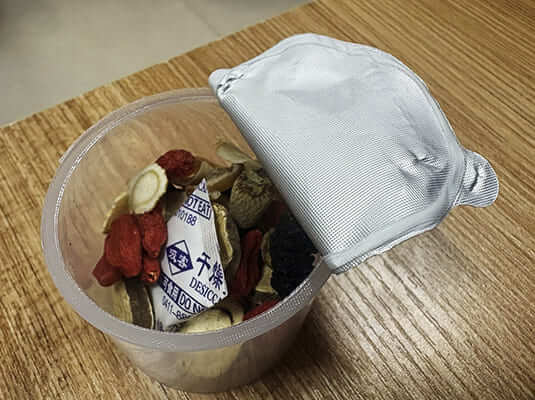
Tea packaging used 9-micron 1235 composiet aluminiumfolie
4.2 Why Composite for 9-Micron Aluminum Foil
Mechanical Protection:
The 9-micron foil cannot survive handling, Verzenden, or retail display as a single layer.
HUISDIER (tensile strength 200–300 MPa) or paper (stiffness 2–5 Nm/g) provide structural armor that prevents flex cracks and abrasion.
Afdicht integriteit:
Aluminum lacks thermoplasticity—it cannot heat-seal. PE or CPP layers (melting point 110–135°C) create hermetic closures through impulse or hot-bar sealing.
Chemical Isolation:
Acidic or alkaline products (tomatensaus, wasmiddelen) corrode aluminum. PE and PP provide inert barriers preventing chemical attack.
Afdrukbaarheid:
Aluminum accepts only limited printing technologies. PET and paper substrates enable high-resolution gravure or flexographic decoration.
Cost Optimization:
At $8–12/kg for aluminum foil versus $2–4/kg for PE, composite structures minimize aluminum usage to the absolute barrier requirement while leveraging cheaper polymers for bulk.
5. Manufacturing Process of 9-Micron 1235 Composite Aluminum Foil
Key steps and control points:
- Casting and hot rolling to produce coil stock.
- Cold rolling schedules with multiple passes to progressively reduce gauge toward foil thickness. Intermediate and final anneals are applied to restore ductility and control grain structure. Precise pass schedules and roll gap control are critical to reach a uniform 9 µm target without excessive edge-wave or thickness variation.
- Surface preparation and cleaning to remove rolling oils and particulates (important to minimize pinholes).
- Coating/lacquering (optioneel) to provide printability and corrosion resistance prior to lamination.
- Lamineren (composite formation) — can be by solventless adhesive, extrusie lamineren (melt adhesive), or solvent/wet adhesives depending on stack and end-use. Proper adhesive selection, nip temperature and pressure are tuned to avoid foil wrinkles and to achieve peel strength targets.
- Slitting and rewinding with strict tension control and anti-static handling for 9 µm gauges.
- Quality inspection (pinhole detection, dikte in kaart brengen, surface inspection) and final packing.
Process control charts for foil production typically track gauge tolerance (bijv., ±0.5 µm target for 9 µm), pinhole counts per m², and laminate peel strength.
6. Applications of 9-Micron 1235 Composite Aluminum Foil
6.1 Flexibele voedselverpakkingen
The 9-micron 1235 foil serves as the barrier backbone for dry goods packaging:
- Coffee and Tea: Aroma retention critical; 9μm foil with <40 pinholes/m² maintains freshness 12–18 months
- Snack Foods: PET/AL/PE structures provide light protection for photosensitive vitamins and flavors
- Powdered Beverages: WVTR <0.01 g/m²·day prevents caking and preserves solubility
High-speed form-fill-seal (FFS) lines operate at 200+ cycles/minute with 9-micron foil, validating its mechanical stability under rapid flexing.
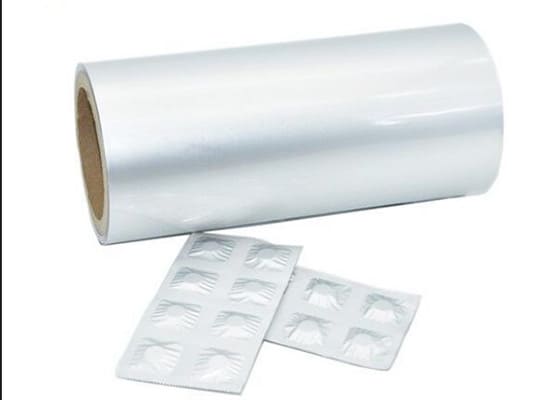
Sachet Strips For Medical Packaging
6.2 Pharmaceutical and Medical Packaging
Secondary overwraps for pharmaceuticals utilize 9-micron foil in:
- Sachet Strips: PET/AL/PE for unit-dose powders and granules
- Dekselfolie: 9μm 1235-O replaces thicker gauges for cost-sensitive OTC products
- Tropical Blister Alternatives: Non-PVC laminates for high-humidity markets
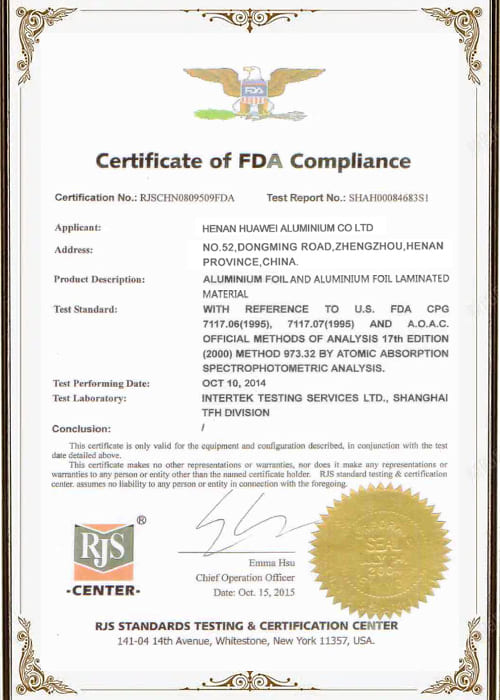
Migration testing per EU 10/2011 and FDA 21 CFR 177.1390 ensures compliance for indirect food contact.
6.3 Tobacco Packaging
Cigarette inner liners represent a major 9-micron application:
- Structuur: Papier (40–60 g/m²)/AL (9urn)/PE (20–30μm)
- Dode vouw: 1235-O temper retains sharp creases without spring-back
- Aromabarrière: Prevents moisture loss and flavor cross-contamination
- Speed Compatibility: Runs at 400+ packs/minute on G.D. and Focke machines
6.4 Industrial and Technical Applications
Cable Wrap: Non-woven/AL/PE laminates provide electromagnetic interference (EMI) shielding with 9-micron foil delivering >60 dB attenuation at 1 GHz.
Bouwisolatie: Foil-faced radiant barriers utilize 9μm 1235 for cost-effective reflectivity (>88% solar reflectance).
Battery Pouch Films: Lamination with nylon and polypropylene creates containment for lithium-ion cells, with 9-micron foil providing moisture barrier and electrical isolation.
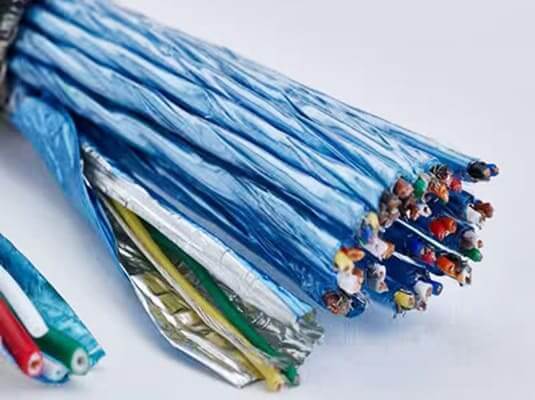
1235 aluminum foil for Cable Wrap
7. Comparative Alloy Analysis
Engineers selecting aluminum foil must evaluate alternatives to 1235. The following matrix compares key options for 9-micron applications:
| Attribuut | 1235 | 8079 | 8011 | Selection Guidance |
|---|---|---|---|---|
| Aluminiumzuiverheid | ≥99.35% | ≥99,0% | ~97.0% (Al-Fe-Si) | 1235 for highest purity; 8079 for pinhole-critical <7urn |
| Treksterkte (O humeur) | 60–90 MPa | 80–110 MPA | 80–120 MPa | Higher strength in 8079/8011 for handling stiffness |
| Verlenging (O humeur) | 25–35% | 15–25% | 15–25% | 1235 superior for deep drawing and folding |
| Dead-Fold Characteristics | Uitstekend | Erg goed | Goed | 1235 preferred for cigarette/tobacco |
| Pinhole Resistance at 9μm | Enhanced: ≤40/m² | Enhanced: ≤30/m² | Enhanced: ≤25/m² | 8079/8011 intermetallics improve rolling; 1235 requires tighter process control |
| Cost Position | $ (Laagst) | $$ | $$ | 1235 offers 10–15% cost advantage |
| typische applicaties | Mainstream food, tabak, general lamination | High-barrier pharma, abuse-resistant pouches | Deksel, tube laminates, heat-seal applications |
8. Huawei 9-Micron 1235 Composite Aluminum Foil Specification
(Representative supplier specification drawn from typical product pages — engineers should request a manufacturer-run Material Test Certificate and sample tests before approving for production.)
Supplier example: Henan Huawei Aluminium Co., Ltd (commercial supplier listing for “9-Micron 1235 Composite Aluminum Foil”). Reported or typical specification items include:
- Legering: 1235 (O temper typical for lamination).
- Nominal aluminum thickness: 9 µm (0.009 mm).
- Composite stacks offered: PET/AL(9)/PE; Paper/AL(9)/PE; BOPP/AL(9)/PE.
- Typical WVTR / OTR for laminated structures (supplier reported example): OTR < 0.1 (units depend on test method; usually cc/m²·day), WVTR < 0.01 (g/m²·dag) for finished laminate — confirm test method and units with supplier before quoting shelf life.
- Dichtheid van gaatjes: marketed as “low pinhole density” — suppliers commonly specify pinhole counts per m² or qualitative grades; ask for measured pinhole counts at acceptance.
- Woedeaanval: O (gegloeid) or light cold-work (as required).
- Coating: optional lacquer for printability; adhesive systems per laminate.
- Pakket: jumbo rolls, typical widths 200–1,600 mm; coil ID/OD to buyer spec.
- Kwaliteitscontrole: thickness tolerance band (voor 9 µm often specified ±0.5–1.0 µm depending on supplier), visual surface class, pinhole acceptance, MTC available on request.
Huawei Aluminum Foil Export Packaging
9. Conclusie
De 9-micron 1235 composiet aluminiumfolie is a testament to the power of systems thinking in material science.
It is a highly optimized solution that acknowledges the limitations of a single material and overcomes them through intelligent combination.
By pairing the absolute barrier potential of an ultra-thin 1235 aluminum foil with the mechanical strength of polymer films, the packaging industry has created a material that is both high-performing and highly economical.
It is not the most robust barrier available, but for the vast majority of flexible packaging needs, it represents the perfect equilibrium of protection, kosten, en efficiëntie.
Veelgestelde vragen
1. If 9-micron foil has pinholes, is it still a “high barrier”?
Ja. In a composite structure, the barrier performance is not determined by the foil alone. The adhesive and polymer layers create a “tortuous path” that effectively seals the microscopic pinholes. The final laminate still provides an exceptionally low OTR and WVTR (bijv., <0.5), which is firmly in the high-barrier category and far superior to any non-foil-based film.
2. Why not just use a thicker foil to avoid pinholes?
You can, but it comes with trade-offs. A thicker foil (bijv., 12µm or 15µm) will have fewer pinholes and more strength, but it will be more expensive, heavier, and result in a stiffer final package, which may not be desirable. 9 microns is often the most cost-effective solution that meets the required barrier specifications for a huge range of products.
3. What is the difference between this and “Alu-Alu” foil?
“Alu-Alu” (koude vorm) foil is a much thicker, soft-temper aluminum foil (typisch 45-60 micron) laminated with OPA and PVC. It is designed to be plastically deformed (cold-formed) into a blister cavity, providing an absolute, 100% barrière. 9-micron composite foil is a thin, flexible material used for flat pouches and bags; it cannot be formed into a deep cavity.
Gieten productieproces en de introductie ervan
Het doel van smelten en gieten is om legeringen te produceren met een bevredigende samenstelling en een hoge smeltzuiverheid, om gunstige voorwaarden te creëren voor het gieten van legeringen van verschillende vormen.
Stappen van het smelt- en gietproces: batching --- voeden --- smeltend --- roeren na het smelten, slakken verwijderen --- pre-analyse bemonstering --- legering toevoegen om de samenstelling aan te passen, roeren --- verfijnen --- statische instelling - Gids ovengieten.
Warmwalsen productieproces en de introductie ervan
- 1. Heetwalsen verwijst over het algemeen naar walsen boven de herkristallisatietemperatuur van het metaal;
- 2. Tijdens het warmwalsproces, het metaal heeft zowel verhardings- als verzachtingsprocessen. Vanwege de invloed van vervormingssnelheid, zolang het herstel- en herkristallisatieproces te laat is, er zal een zekere werkverharding zijn;
- 3. De herkristallisatie van het metaal na warmwalsen is onvolledig, dat is, het naast elkaar bestaan van herkristalliseerde structuur en vervormde structuur;
- 4. Warmwalsen kan de verwerkingsprestaties van metalen en legeringen verbeteren, gietfouten verminderen of elimineren.
- 1. De giet- en walstemperatuur ligt over het algemeen tussen 680°C en 700°C. Hoe lager hoe beter, de stabiele giet- en walslijn stopt meestal een keer per maand of vaker om opnieuw te staan. Tijdens het productieproces, het is noodzakelijk om het vloeistofniveau van de voortank strikt te controleren om een laag vloeistofniveau te voorkomen;
- 2. Smering gebruikt C-poeder met onvolledige verbranding van gas voor smering, wat ook een van de redenen is voor het vuile oppervlak van giet- en walsmaterialen;
- 3. De productiesnelheid ligt over het algemeen tussen 1,5 m/min-2,5 m/min;
- 4. De oppervlaktekwaliteit van door gieten en walsen vervaardigde producten is over het algemeen relatief laag, en kunnen over het algemeen niet voldoen aan producten met speciale fysieke en chemische prestatie-eisen.
- 1. Koudwalsen verwijst naar de walsproductiemethode onder de herkristallisatietemperatuur;
- 2. Er zal geen dynamische herkristallisatie zijn tijdens het walsproces, en de temperatuur zal maximaal stijgen tot de hersteltemperatuur, en het koudwalsen zal verschijnen in een werkverhardende staat, en de werkverhardingssnelheid zal groot zijn;
- 3. De koudgewalste plaat en strip hebben een hoge maatnauwkeurigheid, goede oppervlaktekwaliteit, uniforme structuur en prestaties, en producten in verschillende toestanden kunnen worden verkregen met warmtebehandeling;
- 4. Koud walsen kan dunne reepjes uitrollen, maar op het zelfde moment, het heeft de nadelen van een hoog energieverbruik voor vervorming en veel bewerkingsgangen.
- 1. Afwerking is een verwerkingsmethode om de koudgewalste plaat te laten voldoen aan de eisen van de klant, of om de latere verwerking van het product te vergemakkelijken;
- 2. De afwerkingsapparatuur kan de defecten corrigeren die zijn veroorzaakt in het productieproces van warmwalsen en koudwalsen, zoals gebarsten rand, olieachtig, slechte plaatvorm, resterende spanning, enz. Het moet ervoor zorgen dat er geen andere defecten in het productieproces worden gebracht;
- 3. Er zijn verschillende afwerkingsapparatuur, voornamelijk met inbegrip van cross-cutting, scheuren, rekken en strekken, gloeioven, glibberen, enz.
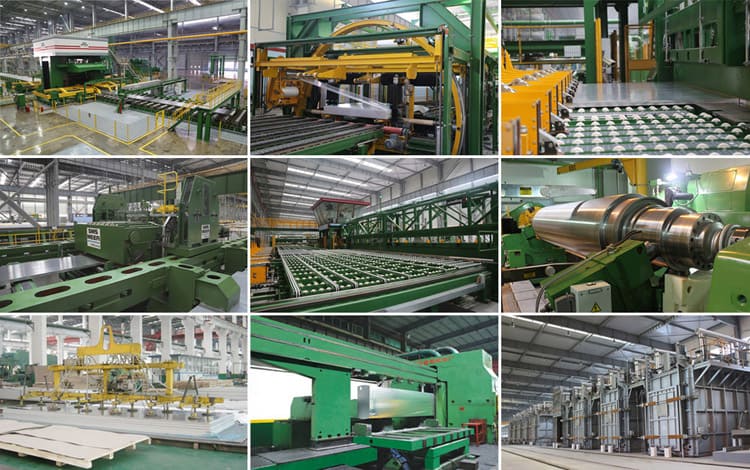
Giet- en walsproces
Giet- en walsproces: vloeibaar metaal, voorste doos (controle van het vloeistofniveau), giet- en rolmachine (smeersysteem, koelwater), scheerapparaat, wikkelmachine.
Koudwalsen productieproces
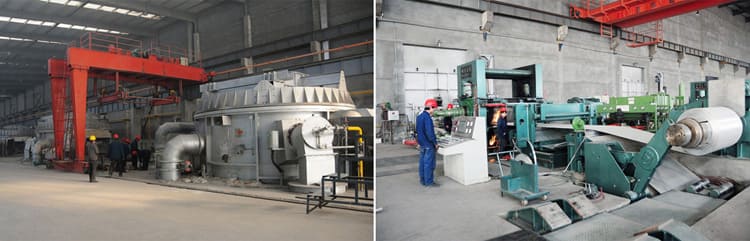
Inleiding tot het afwerken van het productieproces
Aluminiumlegering heeft de kenmerken van lage dichtheid, goede mechanische eigenschappen, goede verwerkingsprestaties, niet giftig, gemakkelijk te recyclen, uitstekende elektrische geleiding, warmteoverdracht en corrosiebestendigheid, dus het heeft een breed scala aan toepassingen.
Ruimtevaart: gebruikt om vliegtuighuiden te maken, romp frames, liggers, rotoren, propellers, brandstoftanks, wandpanelen en stutten van het landingsgestel, evenals ringen voor het smeden van raketten, ruimtevaartuig wandpanelen, enz.
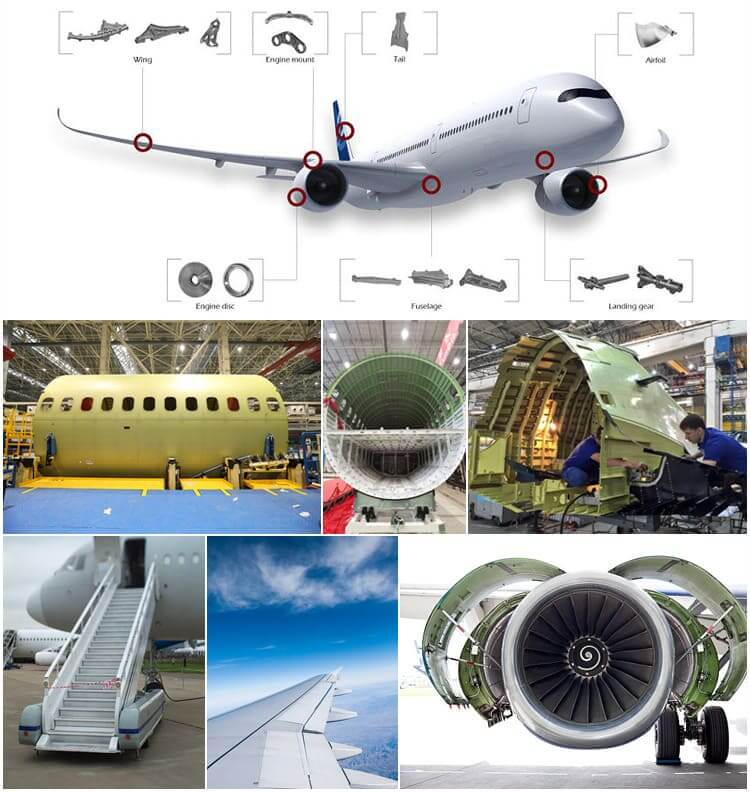
Aluminiumlegering gebruikt voor ruimtevaart
Vervoer: gebruikt voor carrosseriematerialen van auto's, metro voertuigen, trein personenauto's, snelle personenauto's, deuren en ramen, planken, auto motor onderdelen, airconditioners, radiatoren, carrosserie panelen, wielen en scheepsmaterialen.
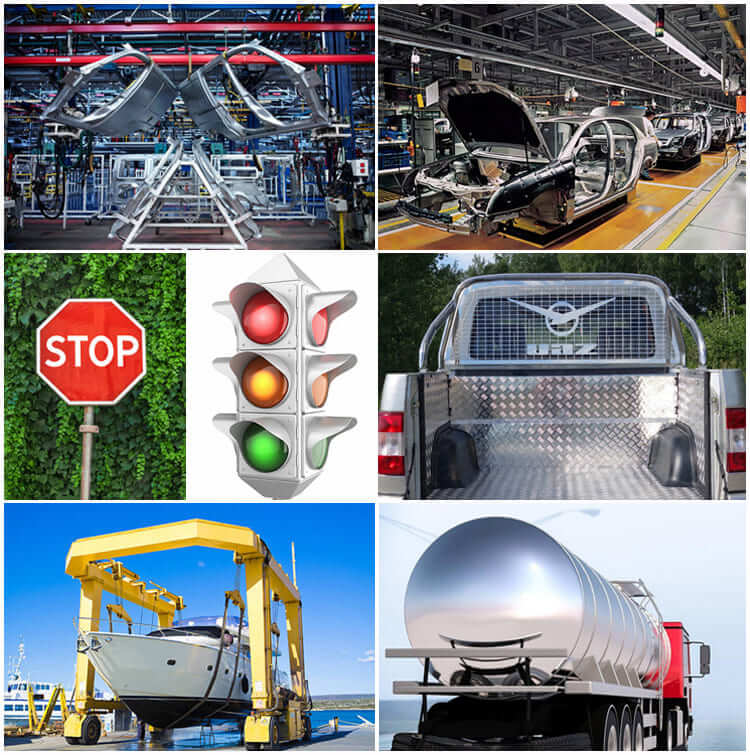
Verkeerstoepassing
Verpakking: Geheel aluminium blikjes worden voornamelijk gebruikt als metalen verpakkingsmateriaal in de vorm van dunne platen en folies, en er worden blikjes van gemaakt, deksels, flessen, vaten, en verpakkingsfolies. Op grote schaal gebruikt in de verpakking van dranken, voedsel, cosmetica, geneesmiddelen, sigaretten, industriële producten, geneesmiddelen, enz.
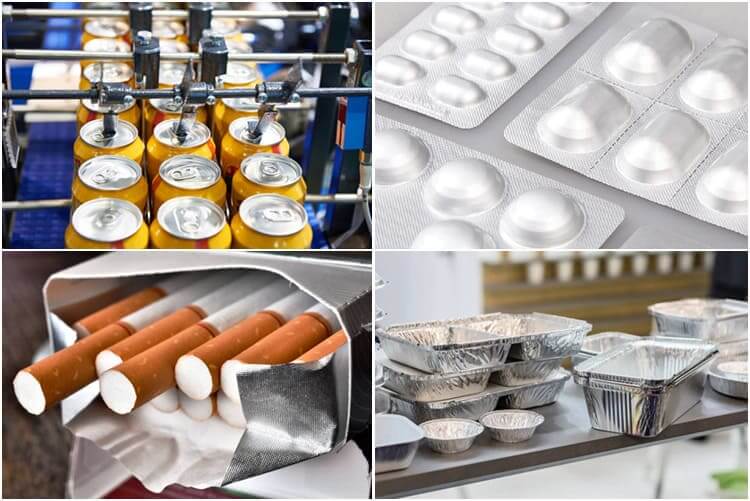
Verpakkingstoepassing
Afdrukken: Hoofdzakelijk gebruikt om PS-platen te maken, PS-platen op basis van aluminium zijn een nieuw type materiaal in de drukindustrie, gebruikt voor het automatisch maken en printen van platen.
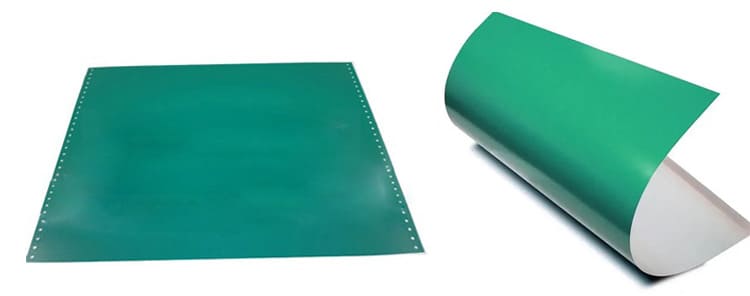
PS-afdrukken
Architecturale decoratie: aluminiumlegering wordt veel gebruikt in bouwconstructies, deuren en ramen, verlaagde plafonds, decoratieve oppervlakken, enz. vanwege de goede corrosiebestendigheid, voldoende kracht, uitstekende procesprestaties en lasprestaties.
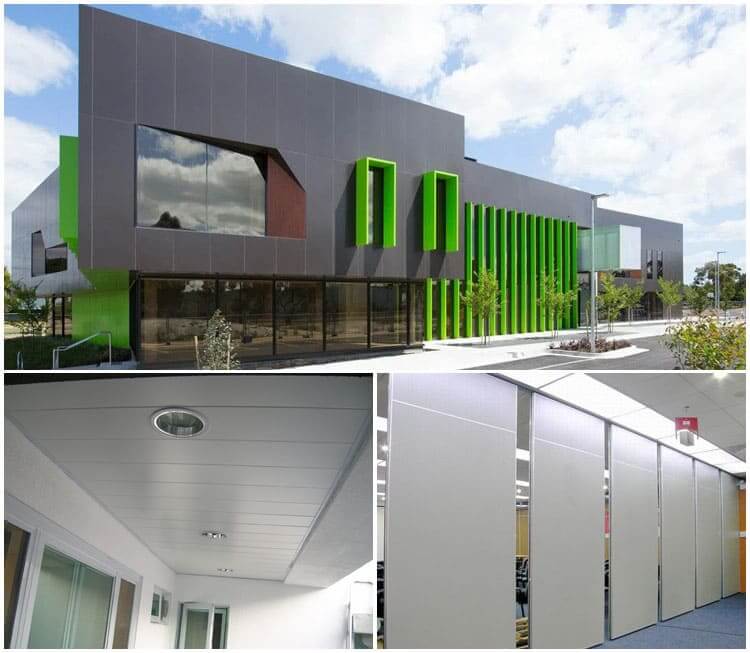
Constructietoepassing van aluminiumlegering
Elektronica: computers, mobieltjes, koelkast schelpen, radiatoren, enz.
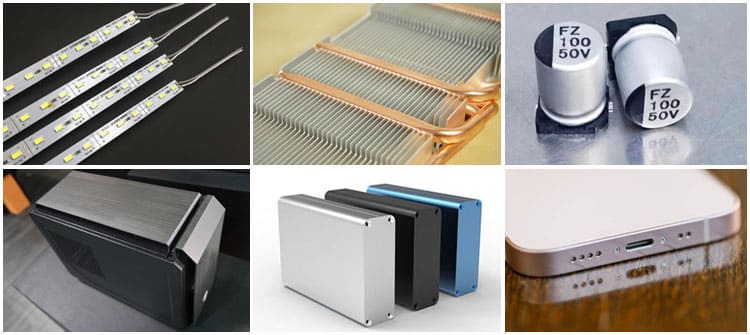
Elektronische producttoepassing
Keukenbenodigdheden: aluminium potten, aluminium wasbakken, rijstkoker voeringen, huishoud aluminiumfolie, enz.
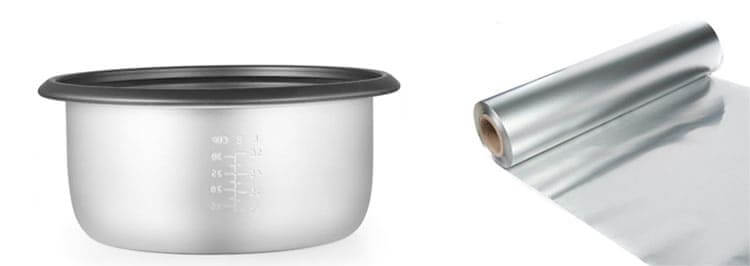
Keuken applicatie
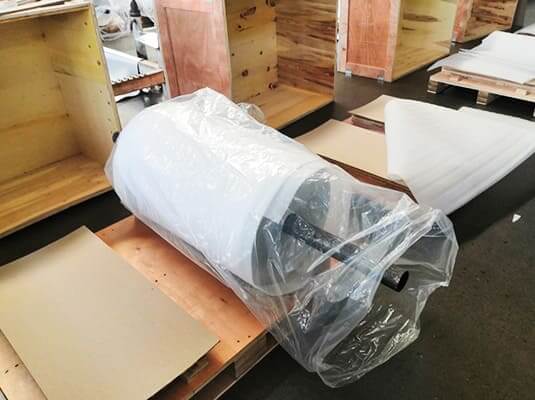
Verpakking van aluminiumplaat / spoel
Elk detail van de verpakking is waar we streven naar perfecte service. Ons verpakkingsproces als geheel is als volgt:
Lamineren: heldere folie, blauwe folie, micro-slijmvlies, hoog slijmvlies, lasersnijden folie (2 merken, Novacell en Polyphem);
Bescherming: papieren hoekbeschermers, anti-druk pads;
drogen: droogmiddel;
Dienblad: gegaste onschadelijk houten dienblad, herbruikbare ijzeren bak;
Inpakken: Stalen riem van boter-kaas-en-eieren, of PVC-verpakkingsriem;
Materiële kwaliteit: Geheel vrij van gebreken zoals witroest, olie vlekken, rollende tekens, rand schade, bochten, deuken, gaten, lijnen breken, krassen, enz., geen bobine set.
Haven: Qingdao of andere havens in China.
Doorlooptijd: 15-45 dagen.
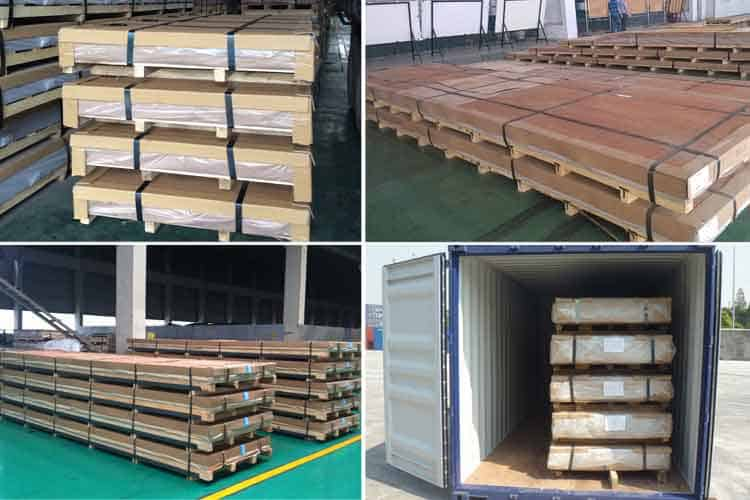
Aluminium plaat/plaat verpakkingsproces
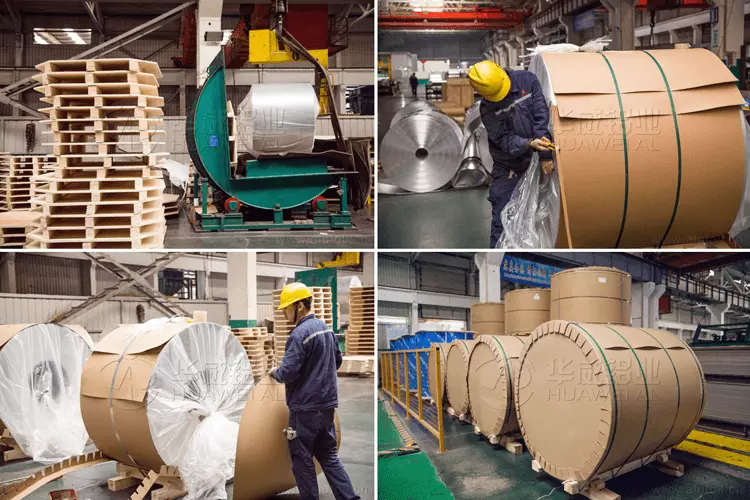
Verpakkingsproces van aluminium spoelen
F: Bent u een fabrikant of een handelaar?
Q: Wij zijn een fabrikant, onze fabriek bevindt zich op No.3 Weier Road, Industrie gebied, Gongyi, Henan, China.
F: Wat is de MOQ voor het bestellen van het product?
Q: Onze MOQ is 5 ton, en sommige speciale producten hebben een minimale bestelhoeveelheid van 1 of 2 ton.
F: Hoe lang is uw doorlooptijd?
Q: Over het algemeen is onze doorlooptijd ongeveer 30 dagen.
F: Hebben uw producten kwaliteitsborging?
Q: Ja, als er een kwaliteitsprobleem is met onze producten, wij vergoeden de klant totdat deze tevreden is.
gerelateerde producten


Laatste blogs
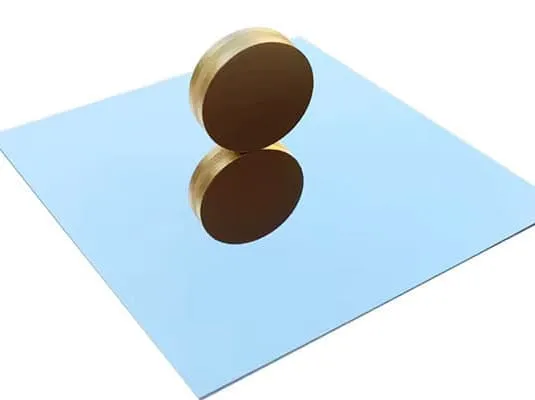
Aluminium spiegelblad met ultrahoge reflectiviteit
Ultrahoge reflectiviteit aluminium spiegelplaat met 95-98% zichtbare reflectie, lage spreiding (TIS <1%), en specificatieadvies voor BRDF, spectrale curven en coatings.

Vertrouwd 3003 Leveranciers van aluminium traanplaatplaten wereldwijd
Vind betrouwbaar 3003 Leveranciers van aluminium traanplaatplaten die gecertificeerde kwaliteit bieden, concurrerende prijzen, aangepaste maten, en snelle wereldwijde levering voor uw projecten.

6061 T6 versus 7075 Aluminium: Kracht, Gewicht & Beste toepassingen
Vergelijken 6061 T6 versus 7075 aluminium gemakkelijk. Ontdek verschillen in kracht, gewicht, en toepassingen om het beste voor uw projecten te kiezen.

Industrialisatie en toepassing van honingraataluminiumfolie
Deze blog onderzoekt de industrialisatie van honingraataluminiumfolie, focussen op de 3003 productieproces van legering. Het omvat warmwalsen, continu gieten, en de continue giet-walsmethode, waarbij de voordelen van procesoptimalisatie bij het verbeteren van de mechanische eigenschappen worden benadrukt, het verminderen van het energieverbruik, en het verlagen van de productiekosten.