1. 소개
9-미크론 1235 복합 알루미늄 호일 고도로 전문화되어 있다, multi-layer material that serves as a cornerstone of the modern flexible packaging industry.
This material system is engineered to provide a high-performance barrier at an optimal cost and weight. Its core is an ultra-thin, 9μm (0.009mm) foil made from 1235 알루미늄 합금, 고순도 (≥99.35% 알루미늄) grade prized for its exceptional softness and workability.
While the 9-micron foil itself provides a near-perfect barrier to light, 가스, 그리고 수분, its thinness makes it mechanically fragile and susceptible to pinholes.
These weaknesses are overcome by laminating it with other polymer films (such as PET, BOPP, and PE). The resulting composite structure leverages the absolute barrier of the aluminum core while gaining the strength, 인쇄 성, and sealability of the polymer layers.
This makes 9-micron 1235 composite foil the go-to solution for a vast range of applications, 식품 포장을 포함한 (간식, 커피, 분유) and pharmaceutical sachets, where a high barrier, 가벼운 무게, and cost-effectiveness are all critical requirements.
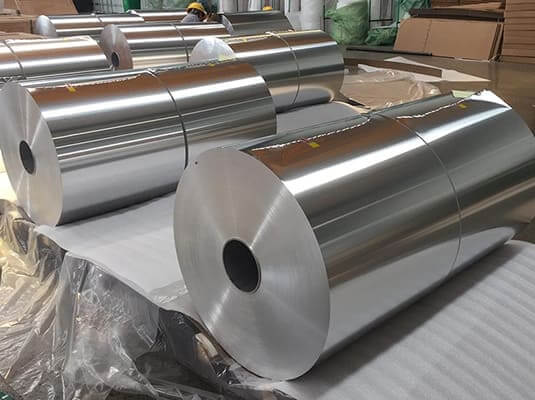
9-미크론 1235 복합 알루미늄 호일
2. 이해 1235 알루미늄 합금
2.1 화학적 구성 요소
그만큼 1235 알루미늄 호일 belongs to the 1xxx series of commercial purity aluminum, specifically engineered for converter foil applications where formability and barrier performance take precedence over structural strength.
The chemical composition adheres to strict limits that maximize rolling efficiency and surface quality.
| 요소 | 최저한의 | 최고 | Functional Role in 9μm Foil |
|---|---|---|---|
| 알류미늄 (알) | 99.35% | — | Matrix providing ductility, 반사율, 및 내식성 |
| 규소 (그리고) | — | 0.10% | Tight control ensures smooth rolling surface and minimizes inclusion defects |
| 철 (철) | — | 0.60% | Provides slight strengthening; excessive levels increase pinhole risk |
| 구리 (Cu) | — | 0.05% | Kept minimal to preserve electrical conductivity and corrosion resistance |
| 망간 (망간) | — | 0.05% | Trace element limited to prevent work hardening |
| 마그네슘 (마그네슘) | — | 0.05% | Controlled to avoid surface oxidation issues |
| 아연 (아연) | — | 0.10% | Impurity management for anodizing compatibility |
| 티탄 (의) | — | 0.03% | Grain refinement in cast ingots |
| 기타 요소 (각) | — | 0.03% | Aggregate impurity cap ensuring consistency |
| 기타 요소 (총) | — | 0.10% | Overall purity protection |
2.2 Microstructure and Temper
그만큼 1235 alloy achieves its optimal properties through careful thermal processing.
Manufacturers produce 9-micron foil in two primary tempers, each serving distinct converting requirements:
오지 (부드러운, 단련):
- 인장 강도: 60–90 MPa (8.7–13.0 ksi)
- 항복 강도: 20–35 MPa (2.9–5.1 ksi)
- 연장: 25-35% (A50mm gauge)
- 경도: 20–25 HB
- 미세구조: Fully recrystallized equiaxed grains (ASTM 6–9) with minimal dislocation density
The O temper maximizes ductility for deep drawing, 접는, and complex forming operations.
The 25–35% elongation enables 9-micron foil to conform to sharp creases in cigarette inner liners and sachet corners without cracking.
This temper also optimizes adhesive wet-out during lamination, as the soft surface conforms to microscopic surface irregularities in plastic films.
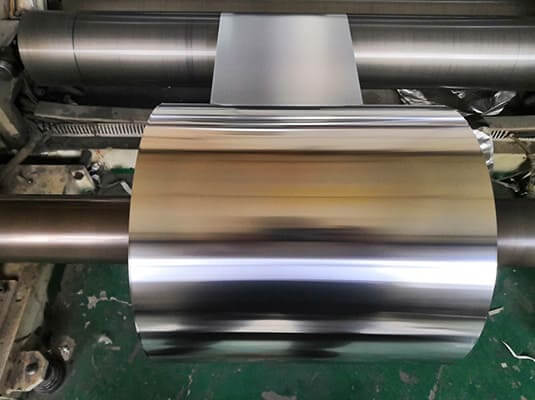
9-미크론 1235 H18 알루미늄 호일
H18 Temper (풀 하드, Cold-Worked):
- 인장 강도: 110–150 MPa (16.0–21.8 ksi)
- 항복 강도: 100–130 MPa (14.5–18.9 ksi)
- 연장: 1–3%
- 경도: 45–55 HB
- 미세구조: Elongated grains with high dislocation density from cold rolling
H18 temper provides handling stiffness for unwind operations and slit-edge stability.
Converters often specify H18 for foil that must traverse long web paths at high speed before lamination, as the increased rigidity reduces wrinkling and edge weaving.
The laminate structure subsequently provides flexibility in the finished product.
3. 9 Micrometer (μm) 두께: Opportunities and Challenges
3.1 Opportunities (Why pursue 9 마이크로 미터?)
- 경량화 & material cost reduction. Moving from e.g., 12–15 µm down to 9 µm reduces aluminum mass by ~25–40%, lowering raw-material cost and package weight. (9 µm = 0.009 mm).
- Excellent barrier per unit mass. Even at 9 µm a continuous aluminum layer provides near-opaque light barrier and very low oxygen and moisture transmission when incorporated into a laminate; suppliers report OTR and WVTR figures that place such laminates in “high barrier” class for many food and pharmaceutical applications.
- Improved form-factor and aesthetics. Thin foil conforms to complex shapes (labels, lidding) with smaller step heights and less bulk.
3.2 도전과제 (Inherent weaknesses of 9 마이크로 미터)
- Mechanical fragility: reduced puncture resistance, higher sensitivity to handling, and increased risk of pinholes during rolling and lamination. Typical practical tensile/puncture performance must be validated for the stack and forming process.
- 핀홀 & defects control: process cleanliness and rolling/anneal schedules must be tightly controlled; pinhole density scales unfavorably with decreasing gauge.
- Adhesion and delamination risk: ultra-thin foil has less cohesive thickness for adhesives to “bite”; surface treatments or lacquers are often required to secure bond strength to polymers.
- Converting difficulty: 슬리팅, embossing, die-cutting and rewinding require specialized tension control, anti-static measures and skilled equipment operators.
4. Structure of 9-Micron 1235 Composite Aluminum Foil
4.1 Typical Composite Structures
The 9-micron 1235 foil rarely serves as standalone packaging. 대신에, it functions as the critical barrier layer within multi-material laminates that combine complementary properties.
Engineers design these structures to position each material where its properties deliver maximum value:
구조 1: PET/AL/PE (General-Purpose Food Packaging)
- 애완 동물 (12–25μm): Exterior print carrier providing mechanical strength, 치수 안정성, and gloss
- 점착제 (1.5–3.0 g/m²): Polyurethane two-component system creating chemical bond
- 알 (9μm): Core barrier layer blocking oxygen, 수분, 그리고 빛
- 점착제 (1.5–3.0 g/m²): Tie layer for polyethylene adhesion
- 체육 (40–80μm): Interior sealant providing heat-sealability, chemical resistance, and food contact compliance
Total thickness: ~65–120μm | 장벽: OTR <0.1 cc/m²·day, WVTR <0.01 g/m²·일
구조 2: Paper/AL/PE (Cigarette Inner Liner)
- 종이 (40–60 g/m²): Exterior providing dead-fold characteristics, 불투명, and tactile quality
- 알 (9μm): Barrier against moisture and aroma loss
- 체육 (20–60μm): Heat-seal layer for pack closure
This structure leverages the “dead-fold” property of 1235-O foil—the ability to retain a crease without spring-back—essential for cigarette pack forming at 400+ packs/minute.
구조 3: BOPP/AL/CPP (Confectionery and Snacks)
- BOPP (20μm): High-clarity exterior with excellent machinability
- 알 (9μm): Barrier and light protection
- CPP (40–70μm): Hot-tack sealant for high-speed form-fill-seal operations
The biaxially oriented polypropylene (BOPP) provides superior crack resistance compared to PET, while cast polypropylene (CPP) offers broader heat-seal windows for confectionery packaging.
구조 4: PA/AL/PE (Puncture-Resistant Pouches)
- 아빠 (15μm, Nylon): Exterior providing exceptional puncture and abrasion resistance
- 알 (9μm): Barrier layer
- 체육 (60–80μm): Sealant and structural bulk
This configuration suits vacuum-packed meats and cheeses where bone edges or sharp corners threaten package integrity.
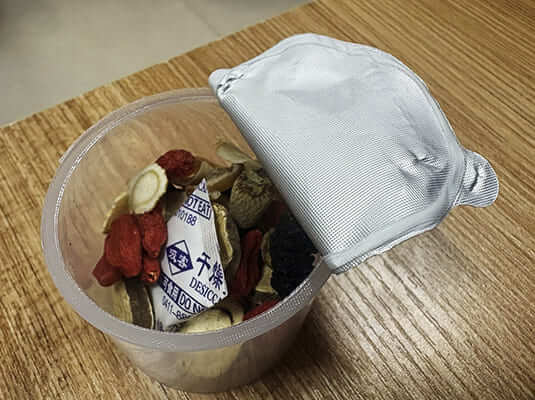
Tea packaging used 9-micron 1235 복합 알루미늄 호일
4.2 Why Composite for 9-Micron Aluminum Foil
Mechanical Protection:
The 9-micron foil cannot survive handling, 배송, or retail display as a single layer.
애완 동물 (tensile strength 200–300 MPa) or paper (stiffness 2–5 Nm/g) provide structural armor that prevents flex cracks and abrasion.
씰 무결성:
Aluminum lacks thermoplasticity—it cannot heat-seal. PE or CPP layers (melting point 110–135°C) create hermetic closures through impulse or hot-bar sealing.
Chemical Isolation:
Acidic or alkaline products (토마토 소스, 세제) corrode aluminum. PE and PP provide inert barriers preventing chemical attack.
인쇄 성:
Aluminum accepts only limited printing technologies. PET and paper substrates enable high-resolution gravure or flexographic decoration.
Cost Optimization:
At $8–12/kg for aluminum foil versus $2–4/kg for PE, composite structures minimize aluminum usage to the absolute barrier requirement while leveraging cheaper polymers for bulk.
5. Manufacturing Process of 9-Micron 1235 Composite Aluminum Foil
Key steps and control points:
- Casting and hot rolling to produce coil stock.
- Cold rolling schedules with multiple passes to progressively reduce gauge toward foil thickness. Intermediate and final anneals are applied to restore ductility and control grain structure. Precise pass schedules and roll gap control are critical to reach a uniform 9 µm target without excessive edge-wave or thickness variation.
- Surface preparation and cleaning to remove rolling oils and particulates (important to minimize pinholes).
- Coating/lacquering (선택 과목) to provide printability and corrosion resistance prior to lamination.
- 라미네이션 (composite formation) — can be by solventless adhesive, 압출 적층 (melt adhesive), or solvent/wet adhesives depending on stack and end-use. Proper adhesive selection, nip temperature and pressure are tuned to avoid foil wrinkles and to achieve peel strength targets.
- Slitting and rewinding with strict tension control and anti-static handling for 9 µm gauges.
- Quality inspection (pinhole detection, 두께 매핑, surface inspection) and final packing.
Process control charts for foil production typically track gauge tolerance (예를 들어, ±0.5 µm target for 9 μm), pinhole counts per m², and laminate peel strength.
6. Applications of 9-Micron 1235 Composite Aluminum Foil
6.1 유연한 식품 포장
The 9-micron 1235 foil serves as the barrier backbone for dry goods packaging:
- Coffee and Tea: Aroma retention critical; 9μm foil with <40 pinholes/m² maintains freshness 12–18 months
- Snack Foods: PET/AL/PE structures provide light protection for photosensitive vitamins and flavors
- Powdered Beverages: WVTR <0.01 g/m²·day prevents caking and preserves solubility
High-speed form-fill-seal (FFS) lines operate at 200+ cycles/minute with 9-micron foil, validating its mechanical stability under rapid flexing.
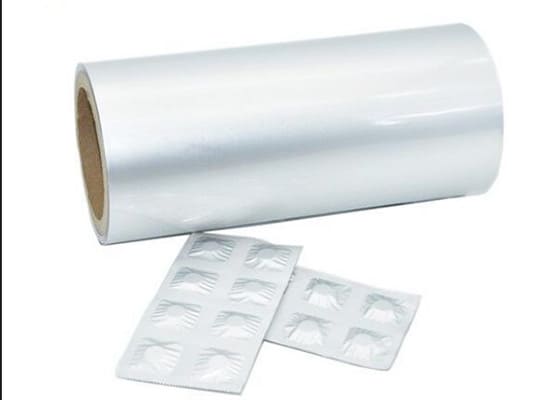
Sachet Strips For Medical Packaging
6.2 Pharmaceutical and Medical Packaging
Secondary overwraps for pharmaceuticals utilize 9-micron foil in:
- Sachet Strips: PET/AL/PE for unit-dose powders and granules
- 리딩 포일: 9μm 1235-O replaces thicker gauges for cost-sensitive OTC products
- Tropical Blister Alternatives: Non-PVC laminates for high-humidity markets
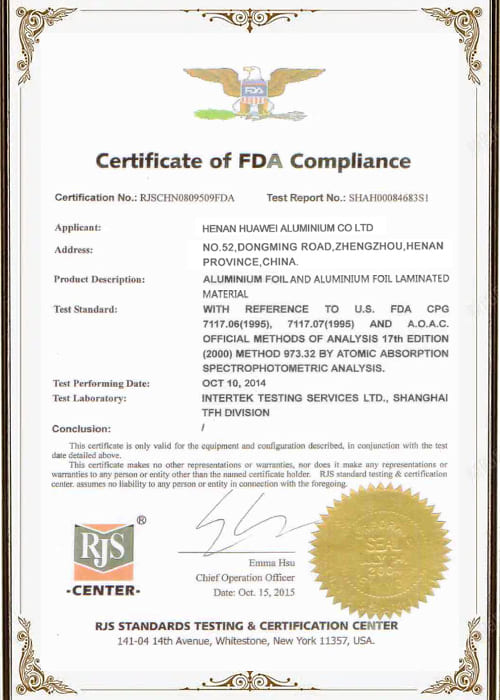
Migration testing per EU 10/2011 and FDA 21 CFR 177.1390 ensures compliance for indirect food contact.
6.3 Tobacco Packaging
Cigarette inner liners represent a major 9-micron application:
- 구조: 종이 (40–60 g/m²)/알 (9μm)/체육 (20–30μm)
- 데드폴드: 1235-O temper retains sharp creases without spring-back
- 아로마 배리어: Prevents moisture loss and flavor cross-contamination
- Speed Compatibility: Runs at 400+ packs/minute on G.D. and Focke machines
6.4 Industrial and Technical Applications
Cable Wrap: Non-woven/AL/PE laminates provide electromagnetic interference (EMI) shielding with 9-micron foil delivering >60 dB attenuation at 1 GHz.
건물 단열재: Foil-faced radiant barriers utilize 9μm 1235 for cost-effective reflectivity (>88% solar reflectance).
Battery Pouch Films: Lamination with nylon and polypropylene creates containment for lithium-ion cells, with 9-micron foil providing moisture barrier and electrical isolation.
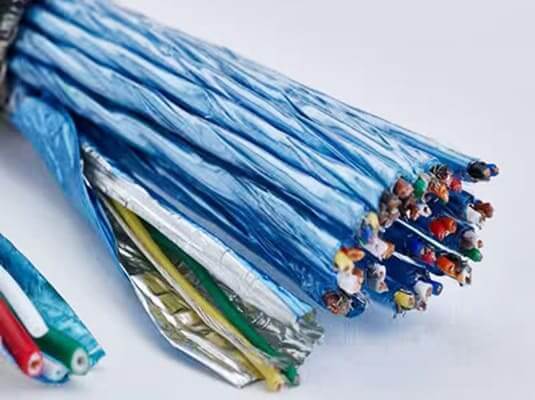
1235 aluminum foil for Cable Wrap
7. Comparative Alloy Analysis
Engineers selecting aluminum foil must evaluate alternatives to 1235. The following matrix compares key options for 9-micron applications:
| 기인하다 | 1235 | 8079 | 8011 | Selection Guidance |
|---|---|---|---|---|
| 알루미늄 순도 | ≥99.35% | ≥99.0% | ~97.0% (Al-Fe-Si) | 1235 for highest purity; 8079 for pinhole-critical <7μm |
| 인장 강도 (아 성질) | 60–90 MPa | 80–110 MPa | 80-120MPa | Higher strength in 8079/8011 for handling stiffness |
| 연장 (아 성질) | 25-35% | 15-25% | 15-25% | 1235 superior for deep drawing and folding |
| Dead-Fold Characteristics | 훌륭한 | 매우 좋은 | 좋은 | 1235 preferred for cigarette/tobacco |
| Pinhole Resistance at 9μm | Enhanced: ≤40/m² | Enhanced: ≤30/m² | Enhanced: ≤25/m² | 8079/8011 intermetallics improve rolling; 1235 requires tighter process control |
| Cost Position | $ (가장 낮습니다) | $$ | $$ | 1235 offers 10–15% cost advantage |
| 일반적인 애플리케이션 | Mainstream food, 담배, general lamination | High-barrier pharma, abuse-resistant pouches | 리딩, tube laminates, heat-seal applications |
8. Huawei 9-Micron 1235 Composite Aluminum Foil Specification
(Representative supplier specification drawn from typical product pages — engineers should request a manufacturer-run Material Test Certificate and sample tests before approving for production.)
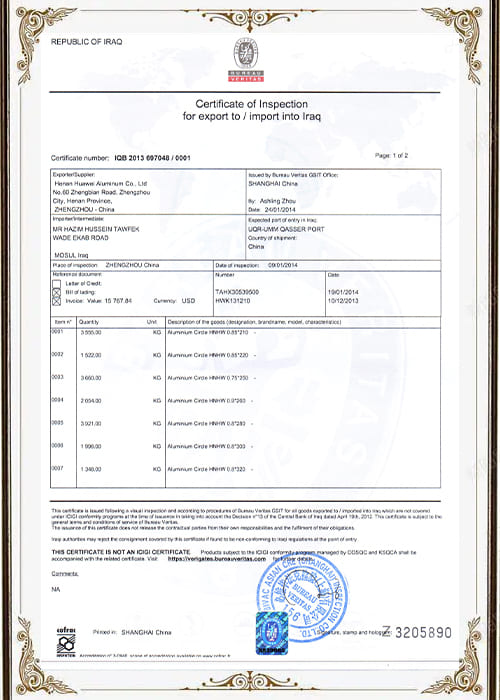
Supplier example: 허난화웨이알루미늄, (주) (commercial supplier listing for “9-Micron 1235 Composite Aluminum Foil”). Reported or typical specification items include:
- 합금: 1235 (O temper typical for lamination).
- Nominal aluminum thickness: 9 μm (0.009 mm).
- Composite stacks offered: PET/AL(9)/체육; Paper/AL(9)/체육; BOPP/AL(9)/체육.
- Typical WVTR / OTR for laminated structures (supplier reported example): OTR < 0.1 (units depend on test method; usually cc/m²·day), WVTR < 0.01 (g/m²·일) for finished laminate — confirm test method and units with supplier before quoting shelf life.
- 핀홀 밀도: marketed as “low pinhole density” — suppliers commonly specify pinhole counts per m² or qualitative grades; ask for measured pinhole counts at acceptance.
- 성질: 영형 (어닐링) or light cold-work (as required).
- 코팅: optional lacquer for printability; adhesive systems per laminate.
- 패키지: jumbo rolls, typical widths 200–1,600 mm; coil ID/OD to buyer spec.
- 품질 관리: thickness tolerance band (~을 위한 9 µm often specified ±0.5–1.0 µm depending on supplier), visual surface class, pinhole acceptance, MTC available on request.
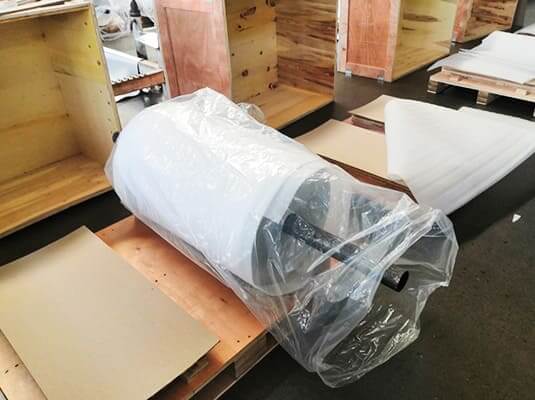
Huawei Aluminum Foil Export Packaging
9. 결론
그만큼 9-미크론 1235 복합 알루미늄 호일 is a testament to the power of systems thinking in material science.
It is a highly optimized solution that acknowledges the limitations of a single material and overcomes them through intelligent combination.
By pairing the absolute barrier potential of an ultra-thin 1235 aluminum foil with the mechanical strength of polymer films, the packaging industry has created a material that is both high-performing and highly economical.
It is not the most robust barrier available, but for the vast majority of flexible packaging needs, it represents the perfect equilibrium of protection, 비용, 그리고 효율성.
자주 묻는 질문
1. If 9-micron foil has pinholes, is it still a “high barrier”?
예. In a composite structure, the barrier performance is not determined by the foil alone. The adhesive and polymer layers create a “tortuous path” that effectively seals the microscopic pinholes. The final laminate still provides an exceptionally low OTR and WVTR (예를 들어, <0.5), which is firmly in the high-barrier category and far superior to any non-foil-based film.
2. Why not just use a thicker foil to avoid pinholes?
You can, but it comes with trade-offs. A thicker foil (예를 들어, 12µm or 15µm) will have fewer pinholes and more strength, but it will be more expensive, heavier, and result in a stiffer final package, which may not be desirable. 9 microns is often the most cost-effective solution that meets the required barrier specifications for a huge range of products.
3. What is the difference between this and “Alu-Alu” foil?
“Alu-Alu” (차가운 형태) foil is a much thicker, soft-temper aluminum foil (일반적으로 45-60 미크론) laminated with OPA and PVC. It is designed to be plastically deformed (cold-formed) into a blister cavity, providing an absolute, 100% 장벽. 9-micron composite foil is a thin, flexible material used for flat pouches and bags; it cannot be formed into a deep cavity.
주조 생산 공정 및 소개
용융 및 주조의 목적은 조성이 만족스럽고 용융 순도가 높은 합금을 생산하는 것입니다., 다양한 형태의 합금 주조에 유리한 조건을 만들기 위해.
용융 및 주조 공정 단계: 배치 --- 급송 --- 녹는 --- 녹인 후 교반, 슬래그 제거 --- 사전 분석 샘플링 --- 구성을 조정하기 위해 합금을 추가, 활발한 --- 정제 --- 정적 설정 - 안내로 주조.
열간 압연 생산 공정 및 소개
- 1. 열간 압연은 일반적으로 금속 재결정 온도 이상에서 압연하는 것을 말합니다.;
- 2. 열간 압연 공정 중, 금속은 경화 및 연화 과정을 모두 가지고 있습니다.. 변형 속도의 영향으로, 복구 및 재결정화 프로세스가 너무 늦는 한, 특정 작업 경화가있을 것입니다;
- 3. 열간 압연 후 금속의 재결정이 불완전합니다., 그건, 재결정 조직과 변형 조직의 공존;
- 4. 열간 압연은 금속 및 합금의 가공 성능을 향상시킬 수 있습니다., 주조 결함 감소 또는 제거.
- 1. 주조 및 압연 온도는 일반적으로 680°C ~ 700°C입니다.. 낮을수록 좋다, 안정적인 주조 및 압연 라인은 일반적으로 한 달에 한 번 이상 정지하여 다시 서 있습니다.. 생산 과정에서, 낮은 액체 레벨을 방지하기 위해 전면 탱크의 액체 레벨을 엄격하게 제어할 필요가 있습니다.;
- 2. 윤활은 윤활을 위해 가스의 불완전 연소로 C 분말을 사용합니다., 이는 또한 주조 및 압연 재료의 더러운 표면에 대한 이유 중 하나입니다.;
- 3. 생산 속도는 일반적으로 1.5m/min-2.5m/min 사이입니다.;
- 4. 주조 및 압연으로 생산되는 제품의 표면 품질은 일반적으로 상대적으로 낮습니다., 일반적으로 특별한 물리적 및 화학적 성능 요구 사항이 있는 제품을 충족할 수 없습니다..
- 1. 냉간 압연은 재결정 온도 이하의 압연 생산 방법을 말합니다.;
- 2. 압연 공정 중에 동적 재결정이 발생하지 않습니다., 그리고 온도는 기껏해야 회복 온도까지 상승할 것입니다, 냉간 압연은 가공 경화 상태로 나타납니다., 작업 경화 속도가 클 것입니다;
- 3. 냉연 시트 및 스트립은 치수 정확도가 높습니다., 좋은 표면 품질, 균일한 구조와 성능, 열처리를 통해 다양한 상태의 제품을 얻을 수 있습니다.;
- 4. 냉간 압연은 얇은 스트립을 롤아웃할 수 있습니다., 하지만 동시에, 변형 및 많은 가공 패스에 대한 높은 에너지 소비의 단점이 있습니다..
- 1. 마무리는 냉간압연판을 고객의 요구사항에 맞게 만드는 가공방법입니다., 또는 제품의 후속 처리를 용이하게 하기 위해;
- 2. 마무리 장비는 열간 압연 및 냉간 압연 생산 공정에서 발생하는 결함을 수정할 수 있습니다., 갈라진 가장자리와 같은, 기름진, 열악한 판 모양, 잔류 응력, 등. 생산 공정에 다른 결함이 발생하지 않도록 해야 합니다.;
- 3. 다양한 마무리 장비가 있습니다, 주로 교차 절단 포함, 슬리팅, 스트레칭 및 교정, 어닐링로, 주르르 미끄러짐, 등.
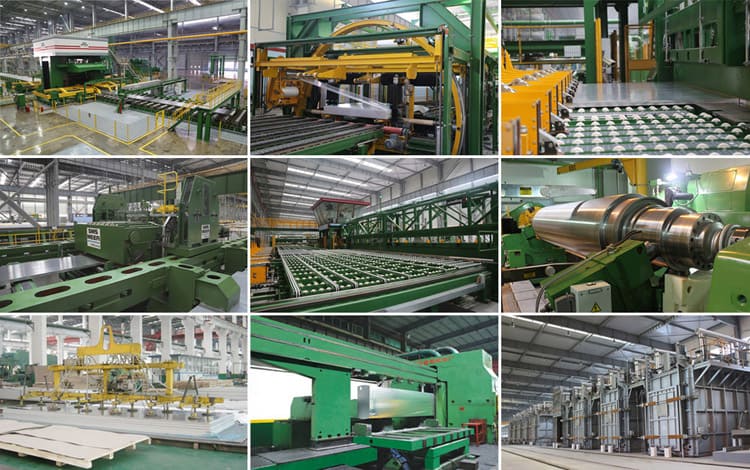
주조 및 압연 공정
주조 및 압연 공정: 액체 금속, 프런트 박스 (액체 레벨 제어), 주조 및 압연기 (윤활 시스템, 냉각수), 전단기, 감기는 기계.
냉간 압연 생산 공정
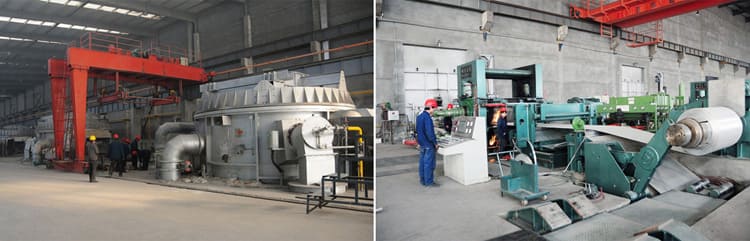
마무리 생산 공정 소개
알루미늄 합금은 밀도가 낮은 특성을 가지고 있습니다., 좋은 기계적 성질, 좋은 처리 성능, 무독성, 재활용하기 쉬운, 우수한 전기 전도성, 열 전달 및 내식성, 그래서 그것에는 응용의 광범위가 있습니다.
항공 우주: 항공기 스킨 제작에 사용, 동체 프레임, 대들보, 로터, 프로펠러, 연료 탱크, 벽 패널 및 랜딩 기어 스트럿, 뿐만 아니라 로켓 단조 링, 우주선 벽면, 등.
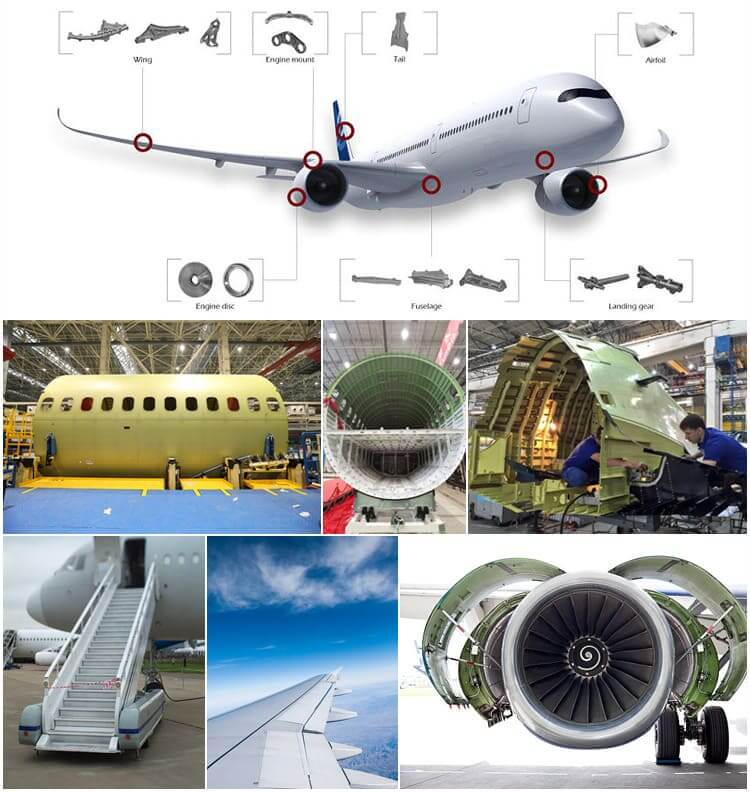
항공 우주에 사용되는 알루미늄 합금
운송: 자동차 차체 구조재로 사용, 지하철 차량, 철도 승용차, 고속 승용차, 문과 창문, 선반, 자동차 엔진 부품, 에어컨, 라디에이터, 바디 패널, 바퀴 및 선박 재료.
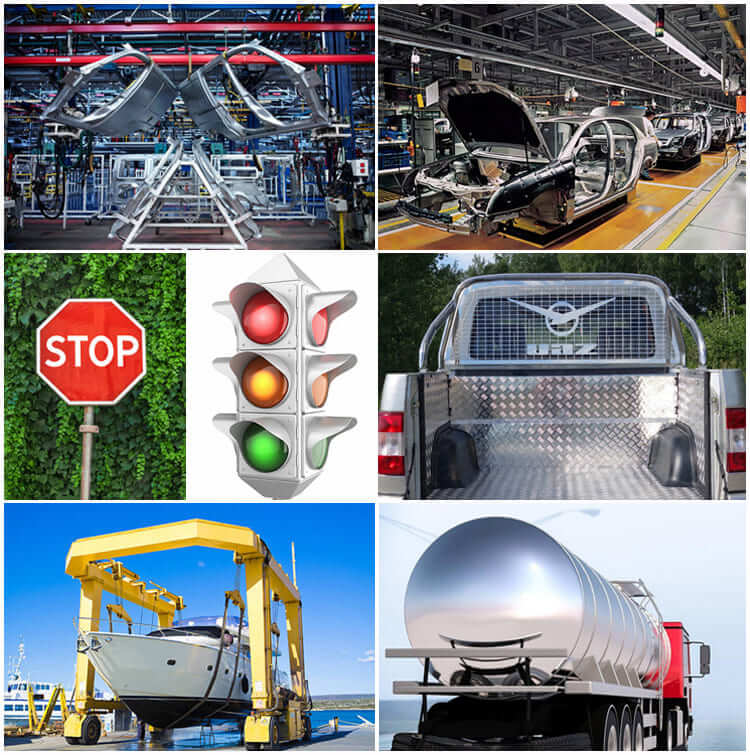
교통 신청
포장: 100% 알루미늄 팝캔은 얇은 판과 호일 형태의 금속 포장재로 주로 사용됩니다., 그리고 캔으로 만들어, 뚜껑, 병, 배럴, 및 포장 포일. 음료 포장에 널리 사용됨, 음식, 화장품, 약, 담배, 공산품, 약, 등.
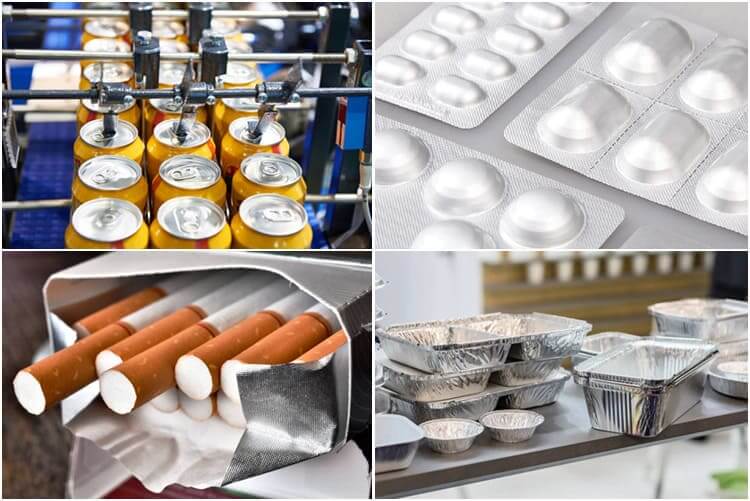
포장 적용
인쇄: 주로 PS 판을 만드는 데 사용, 알루미늄 기반 PS 플레이트는 인쇄 산업의 새로운 유형의 재료입니다., 자동 제판 및 인쇄에 사용.
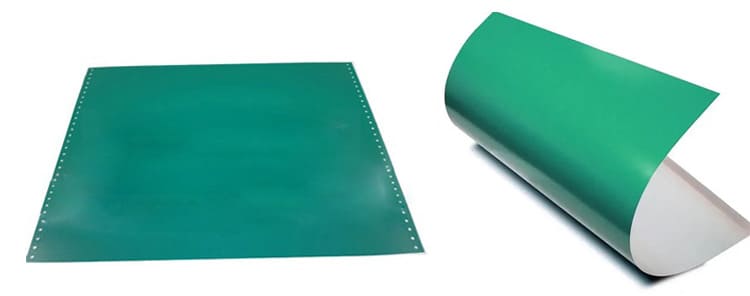
PS 인쇄
건축 장식: 알루미늄 합금은 건축 구조물에 널리 사용됩니다., 문과 창문, 매달린 천장, 장식용 표면, 등. 내식성이 좋기 때문에, 충분한 강도, 우수한 공정 성능 및 용접 성능.
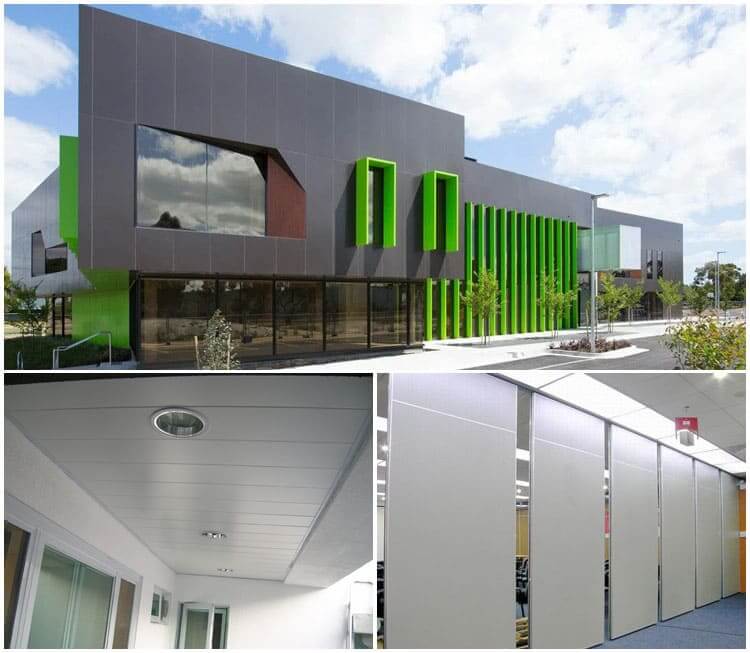
알루미늄 합금 구조 적용
전자 제품: 컴퓨터, 휴대 전화, 냉장고 껍질, 라디에이터, 등.
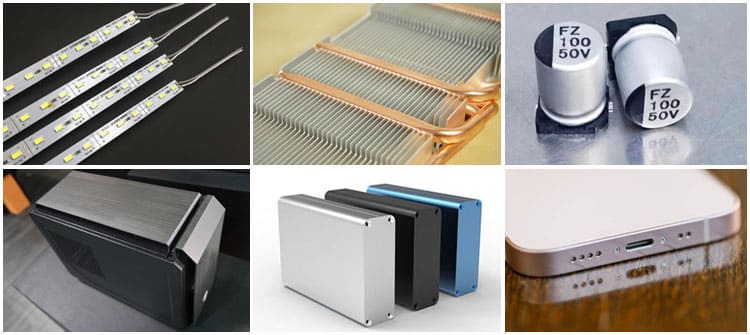
전자 제품 응용
주방 용품: 알루미늄 냄비, 알루미늄 분지, 밥솥 라이너, 가정용 알루미늄 호일, 등.
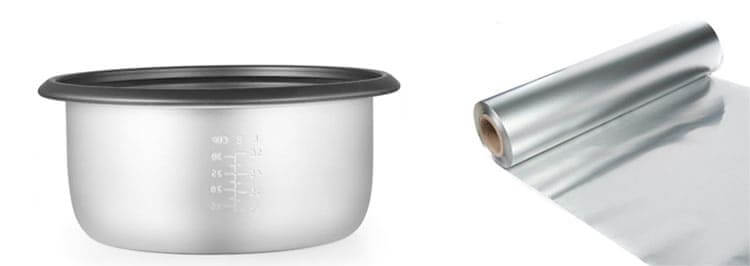
주방 응용 프로그램
알루미늄 시트/코일 포장
포장의 모든 디테일에서 완벽한 서비스를 추구합니다.. 전체 포장 프로세스는 다음과 같습니다.:
라미네이션: 투명 필름, 파란 필름, 미세점막, 높은 점막, 레이저 커팅 필름 (2 브랜드, 노바셀과 폴리펨);
보호: 종이 코너 프로텍터, 압력 방지 패드;
건조: 건조제;
쟁반: 훈증 무해한 나무 트레이, 재사용 철 트레이;
포장: 틱택토 강철 벨트, 또는 PVC 패킹 벨트;
재료 품질: 백청 등의 하자가 전혀 없음, 오일 스팟, 롤링 마크, 가장자리 손상, 굴곡, 찌그러짐, 구멍, 브레이크 라인, 흠집, 등., 코일 세트 없음.
포트: 청도 또는 중국의 다른 항구.
리드타임: 15-45 날.
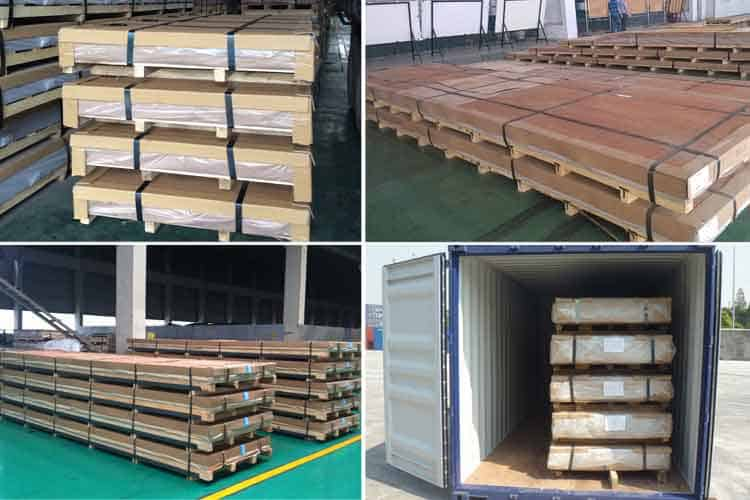
알루미늄 시트/플레이트 포장 공정
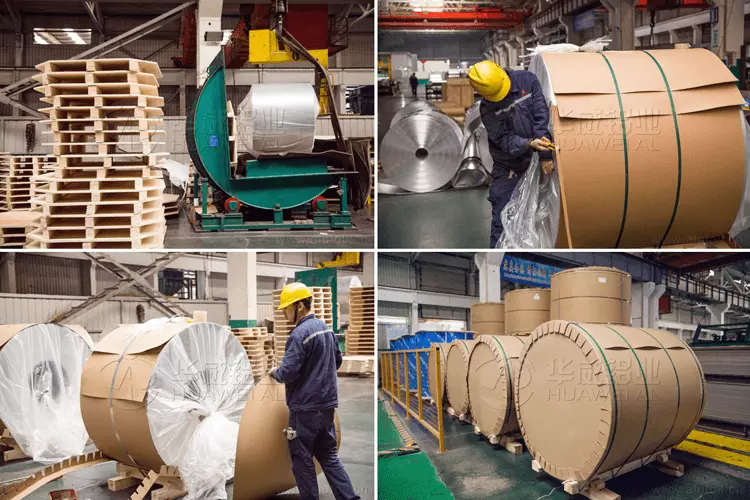
알루미늄 코일 포장 공정
에프: 당신은 제조업자입니까 아니면 상인입니까?
큐: 우리는 제조업체입니다, 우리 공장은 No.3 Weier Road에 있습니다., 공업 지대, 궁이, 허난, 중국.
에프: 제품 주문을 위한 MOQ는 무엇입니까?
큐: 우리의 MOQ는 5 톤, 일부 특수 제품에는 최소 주문량이 있습니다. 1 또는 2 톤.
에프: 당신의 리드타임은 얼마나 됩니까?
큐: 일반적으로 우리의 리드타임은 대략 입니다 30 날.
에프: 제품에 품질 보증이 있습니까??
큐: 예, 우리 제품에 품질 문제가 있는 경우, 우리는 고객이 만족할 때까지 보상할 것입니다..
관련 상품


최신 블로그

신뢰할 수 있는 3003 전세계 알루미늄 체커 플레이트 시트 공급 업체
신뢰할 수 있는 찾기 3003 인증된 품질을 제공하는 알루미늄 체커 플레이트 시트 공급업체, 경쟁력 있는 가격, 맞춤 크기, 귀하의 프로젝트에 대한 빠른 글로벌 배송.

6061 T6 대 7075 알류미늄: 힘, 무게 & 최고의 용도
비교하다 6061 T6 대 7075 알루미늄 쉽게. 힘의 차이를 발견하세요, 무게, 귀하의 프로젝트에 가장 적합한 것을 선택할 수 있는 애플리케이션.

허니컴 알루미늄 호일의 산업화 및 응용
이 블로그에서는 벌집형 알루미늄 호일의 산업화를 탐구합니다., 에 초점을 맞추고 3003 합금 생산 공정. 열간압연을 다룬다, 연속 주조, 및 연속 주조 압연 방식, 기계적 특성 개선에 있어서 공정 최적화의 이점을 강조합니다., 에너지 소비 감소, 생산 비용 절감.