1. Introduction
9-micron 1235 feuille d'aluminium composite est un organisme hautement spécialisé, multi-layer material that serves as a cornerstone of the modern flexible packaging industry.
This material system is engineered to provide a high-performance barrier at an optimal cost and weight. Its core is an ultra-thin, 9µm (0.009millimètre) foil made from 1235 alliage d'aluminium, une grande pureté (≥99,35 % Al) grade prized for its exceptional softness and workability.
While the 9-micron foil itself provides a near-perfect barrier to light, des gaz, et l'humidité, its thinness makes it mechanically fragile and susceptible to pinholes.
These weaknesses are overcome by laminating it with other polymer films (such as PET, BOPP, and PE). The resulting composite structure leverages the absolute barrier of the aluminum core while gaining the strength, imprimabilité, and sealability of the polymer layers.
This makes 9-micron 1235 composite foil the go-to solution for a vast range of applications, y compris les emballages alimentaires (collations, café, lait en poudre) and pharmaceutical sachets, where a high barrier, poids léger, and cost-effectiveness are all critical requirements.
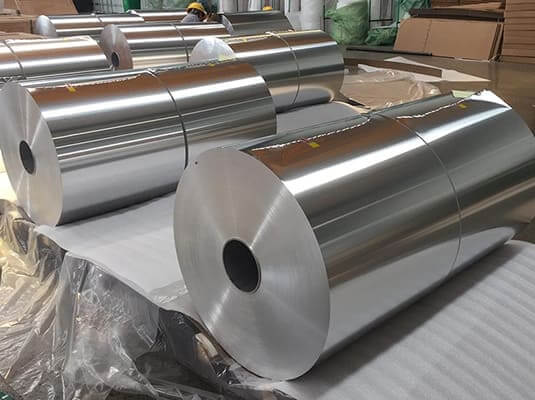
9-micron 1235 feuille d'aluminium composite
2. Compréhension 1235 Alliage d'aluminium
2.1 Composition chimique
Le 1235 feuille d'aluminium belongs to the 1xxx series of commercial purity aluminum, specifically engineered for converter foil applications where formability and barrier performance take precedence over structural strength.
The chemical composition adheres to strict limits that maximize rolling efficiency and surface quality.
| Élément | Le minimum | Maximum | Functional Role in 9μm Foil |
|---|---|---|---|
| Aluminium (Al) | 99.35% | - | Matrix providing ductility, réflectivité, et résistance à la corrosion |
| Silicium (Et) | - | 0.10% | Tight control ensures smooth rolling surface and minimizes inclusion defects |
| Fer (Fe) | - | 0.60% | Provides slight strengthening; excessive levels increase pinhole risk |
| Cuivre (Cu) | - | 0.05% | Kept minimal to preserve electrical conductivity and corrosion resistance |
| Manganèse (Mn) | - | 0.05% | Trace element limited to prevent work hardening |
| Magnésium (mg) | - | 0.05% | Controlled to avoid surface oxidation issues |
| Zinc (Zn) | - | 0.10% | Impurity management for anodizing compatibility |
| Titane (De) | - | 0.03% | Grain refinement in cast ingots |
| Autres éléments (Chaque) | - | 0.03% | Aggregate impurity cap ensuring consistency |
| Autres éléments (Total) | - | 0.10% | Overall purity protection |
2.2 Microstructure and Temper
Le 1235 alloy achieves its optimal properties through careful thermal processing.
Manufacturers produce 9-micron foil in two primary tempers, each serving distinct converting requirements:
O COMMURE (Doux, Recuit):
- Résistance à la traction: 60–90 MPa (8.7–13.0 ksi)
- Limite d'élasticité: 20–35 MPa (2.9–5.1 ksi)
- Élongation: 25–35% (A50mm gauge)
- Dureté: 20–25 HB
- Microstructure: Fully recrystallized equiaxed grains (ASTM 6–9) with minimal dislocation density
The O temper maximizes ductility for deep drawing, pliant, and complex forming operations.
The 25–35% elongation enables 9-micron foil to conform to sharp creases in cigarette inner liners and sachet corners without cracking.
This temper also optimizes adhesive wet-out during lamination, as the soft surface conforms to microscopic surface irregularities in plastic films.
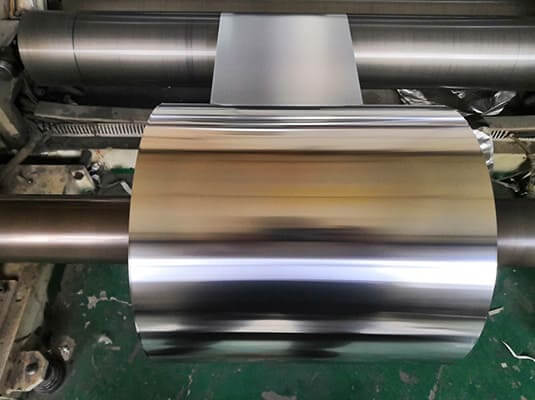
9-micron 1235 Feuille d'aluminium H18
H18 Temper (Plein dur, Cold-Worked):
- Résistance à la traction: 110–150 MPa (16.0–21.8 ksi)
- Limite d'élasticité: 100–130 MPa (14.5–18.9 ksi)
- Élongation: 1–3%
- Dureté: 45–55 HB
- Microstructure: Elongated grains with high dislocation density from cold rolling
H18 temper provides handling stiffness for unwind operations and slit-edge stability.
Converters often specify H18 for foil that must traverse long web paths at high speed before lamination, as the increased rigidity reduces wrinkling and edge weaving.
The laminate structure subsequently provides flexibility in the finished product.
3. 9 Micrometer (µm) Épaisseur: Opportunities and Challenges
3.1 Opportunities (Why pursue 9 micromètres?)
- Allègement & material cost reduction. Moving from e.g., 12–15 µm down to 9 µm reduces aluminum mass by ~25–40%, lowering raw-material cost and package weight. (9 µm = 0.009 millimètre).
- Excellent barrier per unit mass. Even at 9 µm a continuous aluminum layer provides near-opaque light barrier and very low oxygen and moisture transmission when incorporated into a laminate; suppliers report OTR and WVTR figures that place such laminates in “high barrier” class for many food and pharmaceutical applications.
- Improved form-factor and aesthetics. Thin foil conforms to complex shapes (labels, lidding) with smaller step heights and less bulk.
3.2 Défis (Inherent weaknesses of 9 micromètres)
- Mechanical fragility: reduced puncture resistance, higher sensitivity to handling, and increased risk of pinholes during rolling and lamination. Typical practical tensile/puncture performance must be validated for the stack and forming process.
- Trous d'épingle & defects control: process cleanliness and rolling/anneal schedules must be tightly controlled; pinhole density scales unfavorably with decreasing gauge.
- Adhesion and delamination risk: ultra-thin foil has less cohesive thickness for adhesives to “bite”; surface treatments or lacquers are often required to secure bond strength to polymers.
- Converting difficulty: fendre, embossing, die-cutting and rewinding require specialized tension control, anti-static measures and skilled equipment operators.
4. Structure of 9-Micron 1235 Composite Aluminum Foil
4.1 Typical Composite Structures
The 9-micron 1235 foil rarely serves as standalone packaging. Plutôt, it functions as the critical barrier layer within multi-material laminates that combine complementary properties.
Engineers design these structures to position each material where its properties deliver maximum value:
Structure 1: PET/AL/PE (General-Purpose Food Packaging)
- ANIMAL DE COMPAGNIE (12–25μm): Exterior print carrier providing mechanical strength, stabilité dimensionnelle, and gloss
- Adhésif (1.5–3.0 g/m²): Polyurethane two-component system creating chemical bond
- AL (9µm): Core barrier layer blocking oxygen, humidité, Et léger
- Adhésif (1.5–3.0 g/m²): Tie layer for polyethylene adhesion
- PE (40–80μm): Interior sealant providing heat-sealability, chemical resistance, and food contact compliance
Total thickness: ~65–120μm | Barrière: OTR <0.1 cc/m²·day, WVTR <0.01 g/m²·jour
Structure 2: Paper/AL/PE (Cigarette Inner Liner)
- Papier (40–60 g/m²): Exterior providing dead-fold characteristics, opacité, and tactile quality
- AL (9µm): Barrier against moisture and aroma loss
- PE (20–60μm): Heat-seal layer for pack closure
This structure leverages the “dead-fold” property of 1235-O foil—the ability to retain a crease without spring-back—essential for cigarette pack forming at 400+ packs/minute.
Structure 3: BOPP/AL/CPP (Confectionery and Snacks)
- BOPP (20µm): High-clarity exterior with excellent machinability
- AL (9µm): Barrier and light protection
- CPP (40–70μm): Hot-tack sealant for high-speed form-fill-seal operations
The biaxially oriented polypropylene (BOPP) provides superior crack resistance compared to PET, while cast polypropylene (CPP) offers broader heat-seal windows for confectionery packaging.
Structure 4: PA/AL/PE (Puncture-Resistant Pouches)
- Pennsylvanie (15µm, Nylon): Exterior providing exceptional puncture and abrasion resistance
- AL (9µm): Barrier layer
- PE (60–80μm): Sealant and structural bulk
This configuration suits vacuum-packed meats and cheeses where bone edges or sharp corners threaten package integrity.
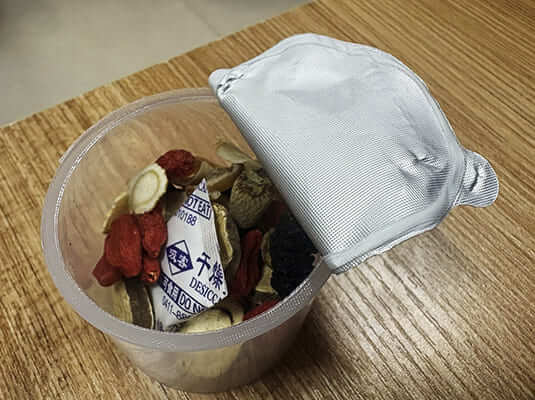
Tea packaging used 9-micron 1235 feuille d'aluminium composite
4.2 Why Composite for 9-Micron Aluminum Foil
Mechanical Protection:
The 9-micron foil cannot survive handling, expédition, or retail display as a single layer.
ANIMAL DE COMPAGNIE (tensile strength 200–300 MPa) or paper (stiffness 2–5 Nm/g) provide structural armor that prevents flex cracks and abrasion.
Intégrité de joints:
Aluminum lacks thermoplasticity—it cannot heat-seal. PE or CPP layers (melting point 110–135°C) create hermetic closures through impulse or hot-bar sealing.
Chemical Isolation:
Acidic or alkaline products (sauce tomate, détergents) corrode aluminum. PE and PP provide inert barriers preventing chemical attack.
Imprimabilité:
Aluminum accepts only limited printing technologies. PET and paper substrates enable high-resolution gravure or flexographic decoration.
Cost Optimization:
At $8–12/kg for aluminum foil versus $2–4/kg for PE, composite structures minimize aluminum usage to the absolute barrier requirement while leveraging cheaper polymers for bulk.
5. Manufacturing Process of 9-Micron 1235 Composite Aluminum Foil
Key steps and control points:
- Casting and hot rolling to produce coil stock.
- Cold rolling schedules with multiple passes to progressively reduce gauge toward foil thickness. Intermediate and final anneals are applied to restore ductility and control grain structure. Precise pass schedules and roll gap control are critical to reach a uniform 9 µm target without excessive edge-wave or thickness variation.
- Surface preparation and cleaning to remove rolling oils and particulates (important to minimize pinholes).
- Coating/lacquering (facultatif) to provide printability and corrosion resistance prior to lamination.
- Laminage (composite formation) — can be by solventless adhesive, stratification par extrusion (melt adhesive), or solvent/wet adhesives depending on stack and end-use. Proper adhesive selection, nip temperature and pressure are tuned to avoid foil wrinkles and to achieve peel strength targets.
- Slitting and rewinding with strict tension control and anti-static handling for 9 µm gauges.
- Quality inspection (pinhole detection, cartographie de l'épaisseur, surface inspection) and final packing.
Process control charts for foil production typically track gauge tolerance (par exemple., ±0.5 µm target for 9 µm), pinhole counts per m², and laminate peel strength.
6. Applications of 9-Micron 1235 Composite Aluminum Foil
6.1 Emballage alimentaire flexible
The 9-micron 1235 foil serves as the barrier backbone for dry goods packaging:
- Coffee and Tea: Aroma retention critical; 9μm foil with <40 pinholes/m² maintains freshness 12–18 months
- Snack Foods: PET/AL/PE structures provide light protection for photosensitive vitamins and flavors
- Powdered Beverages: WVTR <0.01 g/m²·day prevents caking and preserves solubility
High-speed form-fill-seal (FFS) lines operate at 200+ cycles/minute with 9-micron foil, validating its mechanical stability under rapid flexing.
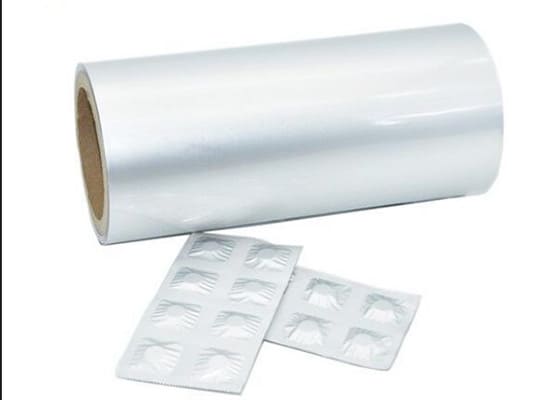
Sachet Strips For Medical Packaging
6.2 Pharmaceutical and Medical Packaging
Secondary overwraps for pharmaceuticals utilize 9-micron foil in:
- Sachet Strips: PET/AL/PE for unit-dose powders and granules
- Couvercle: 9μm 1235-O replaces thicker gauges for cost-sensitive OTC products
- Tropical Blister Alternatives: Non-PVC laminates for high-humidity markets
Migration testing per EU 10/2011 and FDA 21 CFR 177.1390 ensures compliance for indirect food contact.
6.3 Tobacco Packaging
Cigarette inner liners represent a major 9-micron application:
- Structure: Papier (40–60 g/m²)/AL (9µm)/PE (20–30μm)
- Pli mort: 1235-O temper retains sharp creases without spring-back
- Barrière aromatique: Prevents moisture loss and flavor cross-contamination
- Speed Compatibility: Runs at 400+ packs/minute on G.D. and Focke machines
6.4 Industrial and Technical Applications
Cable Wrap: Non-woven/AL/PE laminates provide electromagnetic interference (EMI) shielding with 9-micron foil delivering >60 dB attenuation at 1 GHz.
Isolation du bâtiment: Foil-faced radiant barriers utilize 9μm 1235 for cost-effective reflectivity (>88% solar reflectance).
Battery Pouch Films: Lamination with nylon and polypropylene creates containment for lithium-ion cells, with 9-micron foil providing moisture barrier and electrical isolation.
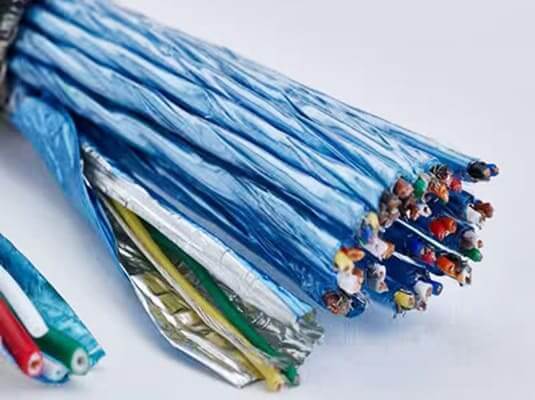
1235 aluminum foil for Cable Wrap
7. Comparative Alloy Analysis
Engineers selecting aluminum foil must evaluate alternatives to 1235. The following matrix compares key options for 9-micron applications:
| Attribut | 1235 | 8079 | 8011 | Selection Guidance |
|---|---|---|---|---|
| Pureté de l’aluminium | ≥99.35% | ≥99,0% | ~97.0% (Al-Fe-Si) | 1235 for highest purity; 8079 for pinhole-critical <7µm |
| Résistance à la traction (Ô tempérament) | 60–90 MPa | 80–110 MPA | 80–120 MPa | Higher strength in 8079/8011 for handling stiffness |
| Élongation (Ô tempérament) | 25–35% | 15–25% | 15–25% | 1235 superior for deep drawing and folding |
| Dead-Fold Characteristics | Excellent | Très bien | Bien | 1235 preferred for cigarette/tobacco |
| Pinhole Resistance at 9μm | Enhanced: ≤40/m² | Enhanced: ≤30/m² | Enhanced: ≤25/m² | 8079/8011 intermetallics improve rolling; 1235 requires tighter process control |
| Cost Position | $ (Le plus bas) | $$ | $$ | 1235 offers 10–15% cost advantage |
| Applications typiques | Mainstream food, le tabac, general lamination | High-barrier pharma, abuse-resistant pouches | Couvercle, tube laminates, heat-seal applications |
8. Huawei 9-Micron 1235 Composite Aluminum Foil Specification
(Representative supplier specification drawn from typical product pages — engineers should request a manufacturer-run Material Test Certificate and sample tests before approving for production.)
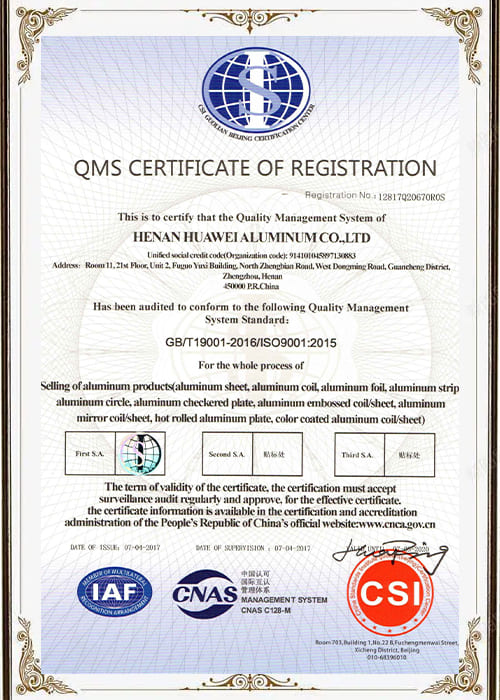
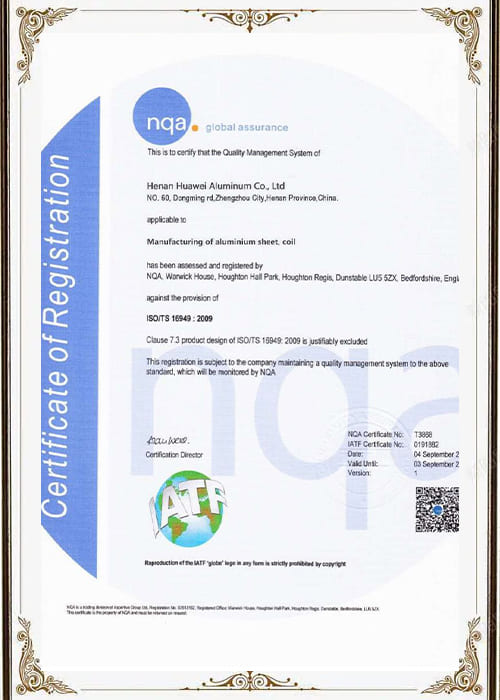
Supplier example: Henan Huawei Aluminium Co., Ltd (commercial supplier listing for “9-Micron 1235 Composite Aluminum Foil”). Reported or typical specification items include:
- Alliage: 1235 (O temper typical for lamination).
- Nominal aluminum thickness: 9 µm (0.009 millimètre).
- Composite stacks offered: PET/AL(9)/PE; Paper/AL(9)/PE; BOPP/AL(9)/PE.
- Typical WVTR / OTR for laminated structures (supplier reported example): OTR < 0.1 (units depend on test method; usually cc/m²·day), WVTR < 0.01 (g/m²·jour) for finished laminate — confirm test method and units with supplier before quoting shelf life.
- Densité des sténopés: marketed as “low pinhole density” — suppliers commonly specify pinhole counts per m² or qualitative grades; ask for measured pinhole counts at acceptance.
- Caractère: O (recuit) or light cold-work (as required).
- enrobage: optional lacquer for printability; adhesive systems per laminate.
- Emballer: jumbo rolls, typical widths 200–1,600 mm; coil ID/OD to buyer spec.
- Contrôle de qualité: thickness tolerance band (pour 9 µm often specified ±0.5–1.0 µm depending on supplier), visual surface class, pinhole acceptance, MTC available on request.
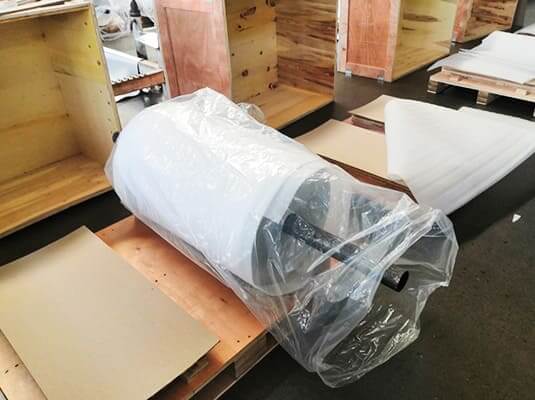
Huawei Aluminum Foil Export Packaging
9. Conclusion
Le 9-micron 1235 feuille d'aluminium composite is a testament to the power of systems thinking in material science.
It is a highly optimized solution that acknowledges the limitations of a single material and overcomes them through intelligent combination.
By pairing the absolute barrier potential of an ultra-thin 1235 aluminum foil with the mechanical strength of polymer films, the packaging industry has created a material that is both high-performing and highly economical.
It is not the most robust barrier available, but for the vast majority of flexible packaging needs, it represents the perfect equilibrium of protection, coût, et efficacité.
FAQ
1. If 9-micron foil has pinholes, is it still a “high barrier”?
Oui. In a composite structure, the barrier performance is not determined by the foil alone. The adhesive and polymer layers create a “tortuous path” that effectively seals the microscopic pinholes. The final laminate still provides an exceptionally low OTR and WVTR (par exemple., <0.5), which is firmly in the high-barrier category and far superior to any non-foil-based film.
2. Why not just use a thicker foil to avoid pinholes?
You can, but it comes with trade-offs. A thicker foil (par exemple., 12µm or 15µm) will have fewer pinholes and more strength, but it will be more expensive, heavier, and result in a stiffer final package, which may not be desirable. 9 microns is often the most cost-effective solution that meets the required barrier specifications for a huge range of products.
3. What is the difference between this and “Alu-Alu” foil?
“Alu-Alu” (forme froide) foil is a much thicker, soft-temper aluminum foil (typiquement 45-60 microns) laminated with OPA and PVC. It is designed to be plastically deformed (cold-formed) into a blister cavity, providing an absolute, 100% barrière. 9-micron composite foil is a thin, flexible material used for flat pouches and bags; it cannot be formed into a deep cavity.
Processus de production de moulage et son introduction
Le but de la fusion et de la coulée est de produire des alliages avec une composition satisfaisante et une grande pureté de fusion, afin de créer des conditions favorables pour la coulée d'alliages de formes diverses.
Étapes du processus de fusion et de coulée: mise en lots --- alimentation --- fusion --- remuer après la fonte, élimination des scories --- échantillonnage pré-analyse --- ajout d'alliage pour ajuster la composition, en remuant --- raffinage --- Réglage statique——Guide de coulée du four.
Processus de production de laminage à chaud et son introduction
- 1. Le laminage à chaud fait généralement référence au laminage au-dessus de la température de recristallisation du métal;
- 2. Pendant le processus de laminage à chaud, le métal subit à la fois des processus de durcissement et de ramollissement. En raison de l'influence de la vitesse de déformation, tant que le processus de récupération et de recristallisation est trop tard, il y aura un certain durcissement au travail;
- 3. La recristallisation du métal après laminage à chaud est incomplète, c'est, la coexistence d'une structure recristallisée et d'une structure déformée;
- 4. Le laminage à chaud peut améliorer les performances de traitement des métaux et des alliages, réduire ou éliminer les défauts de moulage.
- 1. La température de coulée et de laminage est généralement comprise entre 680°C et 700°C. Plus c'est bas mieux c'est, la ligne de coulée et de laminage stable s'arrête généralement une fois par mois ou plus pour se remettre en place. Pendant le processus de fabrication, il est nécessaire de contrôler strictement le niveau de liquide du réservoir avant pour éviter un niveau de liquide bas;
- 2. La lubrification utilise de la poudre C avec une combustion incomplète du gaz pour la lubrification, qui est également l'une des raisons de la saleté de la surface des matériaux de coulée et de laminage;
- 3. La vitesse de production est généralement comprise entre 1,5 m/min et 2,5 m/min;
- 4. La qualité de surface des produits issus du moulage et du laminage est généralement relativement faible, et ne peut généralement pas répondre aux produits avec des exigences de performances physiques et chimiques particulières.
- 1. Le laminage à froid fait référence à la méthode de production de laminage en dessous de la température de recristallisation;
- 2. Il n'y aura pas de recristallisation dynamique pendant le processus de laminage, et la température montera jusqu'à la température de récupération au plus, et le laminage à froid apparaîtra dans un état d'écrouissage, et le taux d'écrouissage sera important;
- 3. La tôle et la bande laminées à froid ont une précision dimensionnelle élevée, bonne qualité de surface, structure et performances uniformes, et des produits dans divers états peuvent être obtenus avec un traitement thermique;
- 4. Le laminage à froid permet de dérouler de fines bandes, mais en même temps, il présente les inconvénients d'une forte consommation d'énergie pour la déformation et de nombreuses passes de traitement.
- 1. La finition est une méthode de traitement pour que la tôle laminée à froid réponde aux exigences du client, ou pour faciliter le traitement ultérieur du produit;
- 2. L'équipement de finition peut corriger les défauts produits dans le processus de production de laminage à chaud et à froid, comme le bord fissuré, huileux, mauvaise forme de l'assiette, contrainte résiduelle, etc.. Il doit s'assurer qu'aucun autre défaut n'est introduit dans le processus de production;
- 3. Il existe divers équipements de finition, principalement transversaux, fendre, étirement et redressement, four de recuit, glisser, etc..
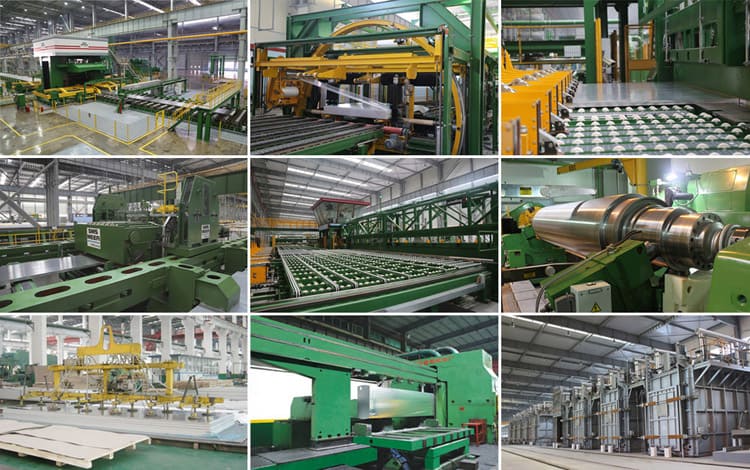
Processus de moulage et de laminage
Processus de moulage et de laminage: métal liquide, boîte avant (contrôle du niveau de liquide), machine de coulée et de laminage (Système de lubrification, eau de refroidissement), machine à cisailler, bobineuse.
Processus de production de laminage à froid
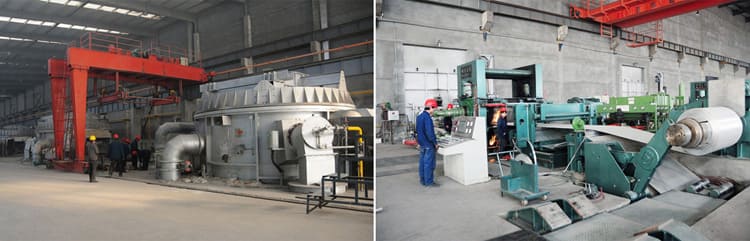
Introduction au processus de production de finition
L'alliage d'aluminium a les caractéristiques de faible densité, bonnes propriétés mécaniques, bonne performance de traitement, non toxique, facile à recycler, excellente conductivité électrique, transfert de chaleur et résistance à la corrosion, il a donc un large éventail d'applications.
Aérospatial: utilisé pour fabriquer des peaux d'avions, cadres de fuselage, poutres, rotors, hélices, réservoir d'essence, panneaux muraux et jambes de train d'atterrissage, ainsi que des anneaux de forgeage de fusée, panneaux muraux pour engins spatiaux, etc..
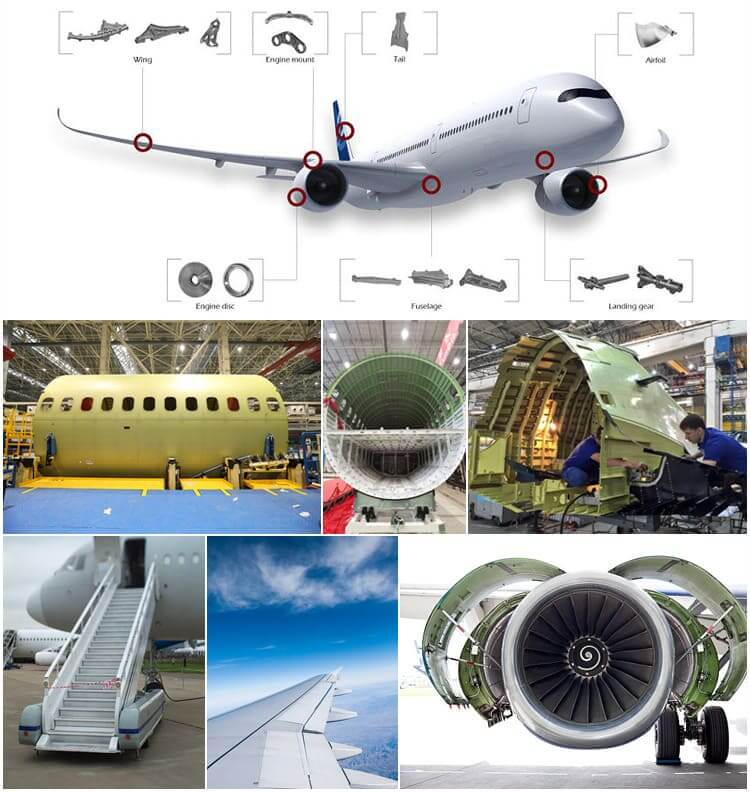
Alliage d'aluminium utilisé pour l'aérospatiale
Transport: utilisé pour les matériaux de structure de carrosserie d'automobiles, véhicules de métro, voitures de chemin de fer, voitures particulières à grande vitesse, Portes et fenêtres, étagères, pièces de moteur automobile, climatiseurs, radiateurs, panneaux de carrosserie, roues et matériaux de bateau.

Demande de trafic
Emballage: Les canettes de boisson gazeuse entièrement en aluminium sont principalement utilisées comme matériaux d'emballage en métal sous la forme de plaques minces et de feuilles, et sont transformés en canettes, couvercles, bouteilles, barils, et feuilles d'emballage. Largement utilisé dans l'emballage des boissons, nourriture, produits de beauté, médicaments, cigarettes, produits industriels, médicaments, etc..
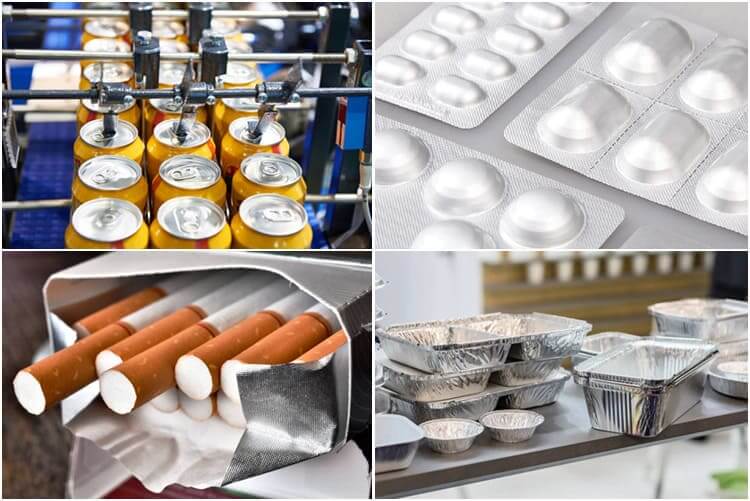
Demande d'emballage
Impression: Principalement utilisé pour fabriquer des plaques PS, Les plaques PS à base d'aluminium sont un nouveau type de matériau dans l'industrie de l'impression, utilisé pour la fabrication et l'impression automatiques de plaques.
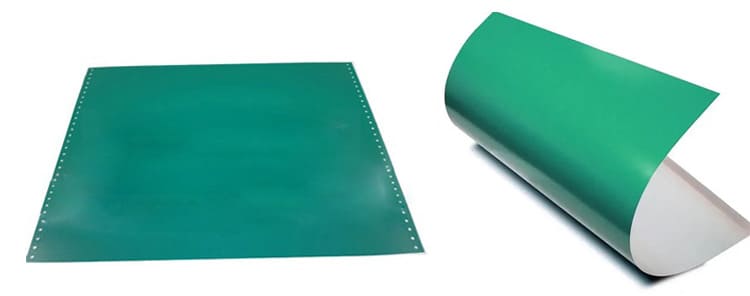
Impression PS
Décoration architecturale: l'alliage d'aluminium est largement utilisé dans les structures de construction, Portes et fenêtres, plafonds suspendus, surfaces décoratives, etc.. en raison de sa bonne résistance à la corrosion, force suffisante, excellentes performances de processus et performances de soudage.

Application de construction en alliage d'aluminium
Produits électroniques: des ordinateurs, téléphones portables, coquilles de réfrigérateur, radiateurs, etc..
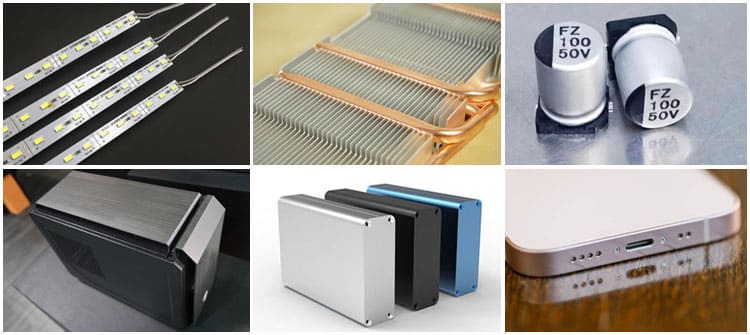
Demande de produit électronique
Fournitures de cuisine: marmites en aluminium, vasques en aluminium, doublures de cuiseur à riz, papier d'aluminium ménager, etc..
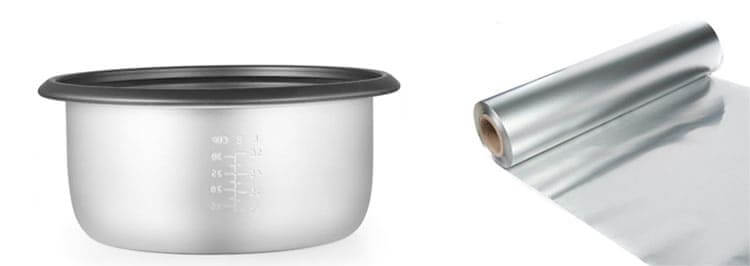
Application cuisine
Emballage de feuille/bobine d'aluminium
Chaque détail de l'emballage est l'endroit où nous recherchons un service parfait. Notre processus d'emballage dans son ensemble est le suivant:
Laminage: film clair, film bleu, micro-muqueuse, haute-muqueuse, film de découpe laser (2 marques, Novacell et Polyphem);
protection: protège-coins en papier, coussinets anti-pression;
séchage: déshydratant;
Plateau: plateau en bois inoffensif fumigé, plateau en fer réutilisable;
Emballage: Ceinture en acier tic-tac-toe, ou ceinture d'emballage en PVC;
Qualité des matériaux: Complètement exempt de défauts tels que la rouille blanche, taches d'huile, marques de roulement, dommages aux bords, se plie, bosses, des trous, lignes de rupture, rayures, etc., pas de jeu de bobines.
Port: Qingdao ou autres ports en Chine.
Délai de mise en œuvre: 15-45 jours.
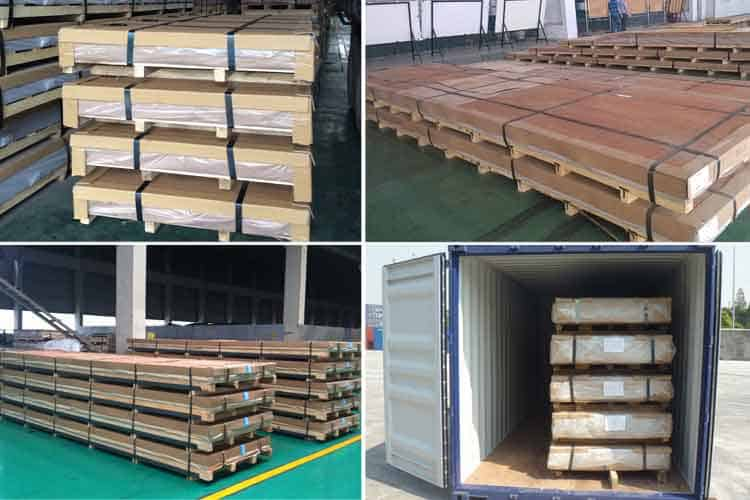
Processus d'emballage de feuilles/plaques d'aluminium
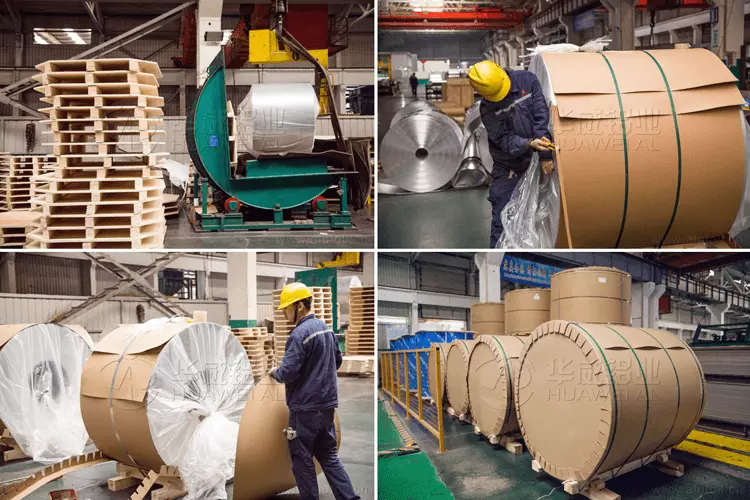
Processus d'emballage de bobines d'aluminium
F: Êtes-vous un fabricant ou un commerçant?
Q: Nous sommes un fabricant, notre usine est au No.3 Weier Road, Zone industrielle, Gongyi, Hénan, Chine.
F: Quel est le MOQ pour commander le produit?
Q: Notre MOQ est 5 tonnes, et certains produits spéciaux auront une quantité minimum de commande de 1 ou 2 tonnes.
F: Combien de temps dure votre délai de livraison?
Q: Généralement, notre délai de livraison est d'environ 30 jours.
F: Vos produits ont-ils une assurance qualité?
Q: Oui, s'il y a un problème de qualité avec nos produits, nous indemniserons le client jusqu'à ce qu'il soit satisfait.
Produits connexes


Derniers blogs
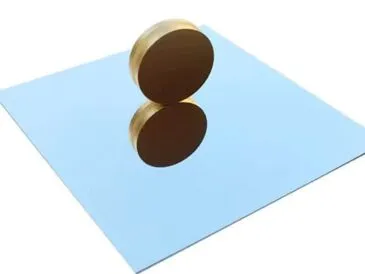
Feuille de miroir en aluminium à ultra haute réflectivité
Feuille de miroir en aluminium à très haute réflectivité avec une réflectance visible de 95 à 98 %, faible diffusion (TIS <1%), et conseils de spécification pour BRDF, courbes spectrales et revêtements.

Confiance 3003 Fournisseurs de tôles à carreaux en aluminium dans le monde entier
Trouver fiable 3003 Fournisseurs de tôles à carreaux en aluminium offrant une qualité certifiée, prix compétitif, tailles personnalisées, et une livraison mondiale rapide pour vos projets.

6061 T6 contre 7075 Aluminium: Force, Lester & Meilleures utilisations
Comparer 6061 T6 contre 7075 aluminium facilement. Découvrez les différences de force, poids, et applications pour choisir le meilleur pour vos projets.

Industrialisation et application du papier d’aluminium en nid d’abeille
Ce blog explore l'industrialisation de la feuille d'aluminium en nid d'abeille, en se concentrant sur le 3003 processus de production d'alliage. Il couvre le laminage à chaud, coulée continue, et la méthode de coulée-laminage continu, mettre en évidence les bénéfices de l’optimisation des procédés dans l’amélioration des propriétés mécaniques, réduire la consommation d'énergie, et réduire les coûts de production.