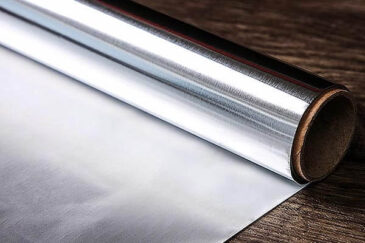
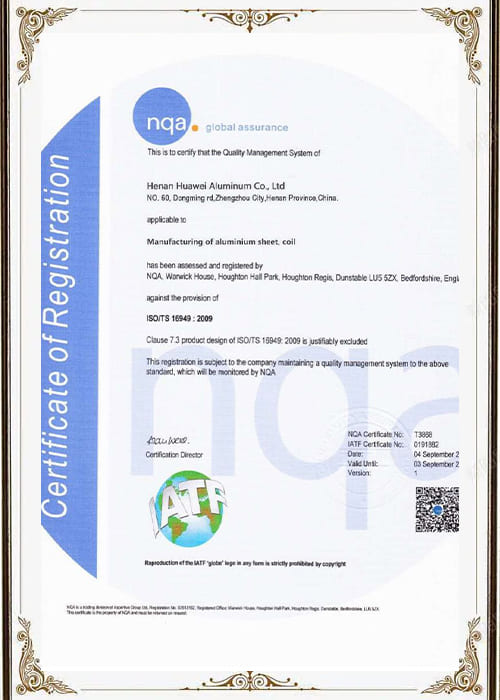
Household 8011 H34 Aluminum Foil Roll
1340 Views 2025-12-15 06:54:42
Introduction
Household 8011 H34 Aluminum Foil Roll is a widely used packaging and functional material that plays an essential role in modern households, food service operations, and light commercial applications.
Designed to meet the combined demands of food safety, mechanical reliability, and ease of use, this foil product represents a carefully optimized balance between alloy composition, temper control, and manufacturing precision.
From a materials engineering perspective, 8011 H34 aluminum foil is specifically developed to deliver consistent performance at very thin gauges.
In addition to its mechanical and thermal advantages, Household 8011 H34 Aluminum Foil Roll offers excellent barrier properties against moisture, oxygen, light, and odors, thereby supporting food freshness and hygiene.
Its high thermal conductivity enables efficient heat transfer during baking and grilling, while its inherent recyclability aligns with growing global emphasis on sustainable and circular packaging materials.
As a result, 8011 H34 aluminum foil continues to serve as a benchmark material in household foil applications, combining technical reliability with economic and environmental practicality.
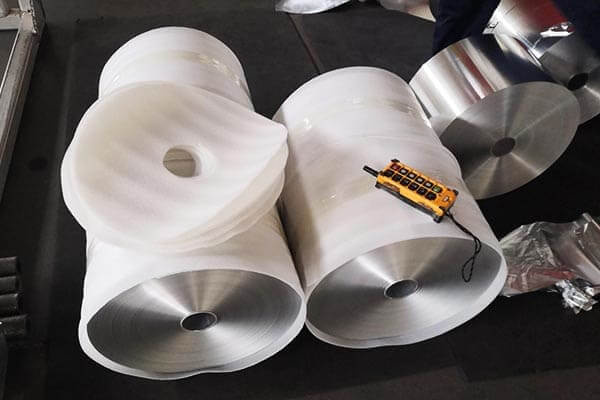
Household 8011 H34 Aluminum Foil Roll
Composition and Properties of 8011 H34 Aluminum Foil
The performance of Household 8011 H34 Aluminum Foil Roll is fundamentally determined by its alloy chemistry and temper condition.
Together, these factors define its mechanical strength, formability, thermal behavior, and suitability for direct food contact.
A clear understanding of the composition and properties of 8011 H34 aluminum foil is essential for evaluating its reliability in household and light commercial applications.
8011 Aluminum Alloy Composition
Aluminum alloy 8011 belongs to the Al–Fe–Si alloy series, which is specifically engineered for foil and packaging applications.
Unlike high-strength structural aluminum alloys, 8011 prioritizes rollability, surface quality, and consistency at extremely thin gauges.
Typical chemical composition of 8011 aluminum alloy (wt%):
| Element | Content Range (%) | Functional Contribution |
|---|---|---|
| Aluminum (Al) | ≥ 97.5 | Base metal, corrosion resistance |
| Iron (Fe) | 0.6 – 1.0 | Strengthening, grain refinement |
| Silicon (Si) | 0.5 – 0.9 | Improves formability and rolling performance |
| Copper (Cu) | ≤ 0.10 | Minor strength enhancement |
| Manganese (Mn) | ≤ 0.20 | Controls grain structure |
| Zinc (Zn) | ≤ 0.10 | Residual element |
| Others (each) | ≤ 0.05 | Controlled impurities |
The controlled iron and silicon content forms finely dispersed intermetallic compounds, which improve mechanical strength while maintaining sufficient ductility.
This balance is critical for producing thin household foil with minimal pinholes and excellent surface finish.
H34 Temper Designation
The “H34” temper is a key factor in 8011’s household adaptability, defined by the Aluminum Association’s temper designation system (ANSI H35.1) as:
- H: Strain-hardened (cold worked) without subsequent annealing;
- 3: Strain-hardened + stabilized (low-temperature annealing to relieve residual stresses);
- 4: Moderate degree of cold work (20–30% cold reduction during rolling).
The H34 temper is achieved via a stabilization annealing process (300–350℃ for 2–4 hours) after cold rolling, which:
- Reduces residual stresses (by 40–50%) to prevent warping during use;
- Stabilizes mechanical properties (hardness, tensile strength) for consistent performance;
- Maintains flexibility while avoiding excessive brittleness.

Household Aluminum Foil
Key Physical and Mechanical Properties
Household 8011 H34 aluminum foil exhibits a stable set of physical and mechanical properties that support its everyday functionality:
| Property | Typical Value | Practical Significance |
|---|---|---|
| Thickness range | 9 – 25 μm | Lightweight and easy to handle |
| Tensile strength | 110 – 145 MPa | Resistance to tearing and stretching |
| Elongation | ≥ 4% | Flexibility for wrapping and folding |
| Density | 2.7 g/cm³ | Low material consumption |
| Thermal conductivity | ~235 W/m·K | Efficient heat transfer |
These characteristics enable consistent performance in cooking, food storage, and general household use while minimizing material waste.
Chemical Stability and Food Safety
From a chemical standpoint, 8011 H34 aluminum foil is highly stable under normal household conditions.
A naturally occurring aluminum oxide layer forms instantly on the surface, providing effective protection against corrosion and environmental exposure.
This passive layer significantly limits aluminum migration when in contact with food.
When manufactured according to recognized food-contact standards, 8011 H34 aluminum foil is considered safe for direct contact with food during storage, cooking, freezing, and reheating.
Its chemical inertness toward neutral foods, combined with strict control of impurities, makes it a trusted material in global household and food-service markets.
3. Manufacturing Process of 8011 H34 Aluminum Foil Roll
The manufacturing of Household 8011 H34 Aluminum Foil Roll is a highly controlled metallurgical and mechanical process designed to ensure uniform thickness, consistent mechanical properties, excellent surface quality, and full compliance with food-contact requirements.
Each stage of production plays a critical role in determining the final performance of the foil in household applications.
Core Production Flow
The production process begins with high-purity aluminum and proceeds through multiple precision-controlled steps:
1. Melting and Alloying
Primary aluminum ingots are melted in controlled furnaces, where alloying elements such as iron and silicon are added in precise proportions.
Chemical composition is continuously monitored using spectrometric analysis to ensure compliance with 8011 alloy specifications.
2. Casting
The molten alloy is cast into slabs using direct chill (DC) casting or continuous casting methods.
Proper control of cooling rates minimizes segregation and ensures uniform microstructure, which is essential for subsequent rolling processes.
3. Hot Rolling
Cast slabs are reheated and hot rolled to reduce thickness significantly while breaking down the cast structure.
Hot rolling improves grain refinement and prepares the material for cold rolling.
4. Cold Rolling
The hot-rolled coil undergoes multiple cold rolling passes to reach intermediate and final foil gauges.
Cold rolling increases strength through strain hardening and ensures precise thickness control, often within microns.
5. Intermediate and Final Annealing
Controlled annealing is applied to partially relieve internal stresses and adjust the foil to the H34 temper.
Temperature, time, and atmosphere are carefully regulated to achieve the desired balance of strength and ductility.
6. Foil Rolling and Finishing
At the final rolling stage, two layers of foil are typically rolled together to achieve ultra-thin thickness.
This process creates the characteristic shiny and matte surfaces of aluminum foil.
7. Slitting, Rewinding, and Packaging
Finished foil is slit to specified widths, rewound onto paper or plastic cores, and packaged according to household roll specifications.

Huawei Aluminum Foil Roll End Face Display
Quality Control Nodes
Quality assurance is embedded throughout the manufacturing process to ensure consistency and safety:
- Chemical composition control: Spectroscopic verification of alloy chemistry
- Thickness and flatness monitoring: Online gauge measurement systems
- Surface inspection: Detection of pinholes, scratches, and inclusions
- Mechanical testing: Tensile strength and elongation verification
- Cleanliness and hygiene checks: Ensuring suitability for food contact
Advantages of Household 8011 H34 Aluminum Foil Roll
Durability and Strength
H34 temper improves tear resistance and puncture strength compared with softer foil grades, reducing waste during use.
Corrosion and Oxidation Resistance
The oxide film provides protection against moisture, oxygen, and moderate chemical exposure.
Lightweight and Flexible
Ultra-thin thickness allows easy shaping without excessive material use.
Thermal Conductivity
High thermal conductivity ensures efficient heat transfer in baking and grilling applications.
Barrier Protection
Aluminum foil provides a near-total barrier to light, oxygen, water vapor, and odors.
Recyclability and Sustainability
Aluminum is infinitely recyclable, and recycling saves up to 95% of energy compared to primary aluminum production.
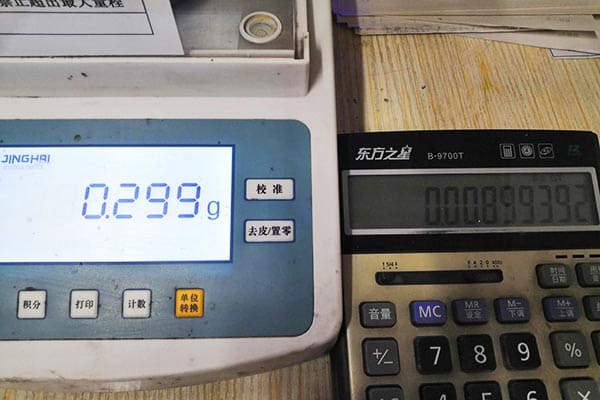
Aluminum Foil Thickness Measurement
Limitations of Household 8011 H34 Aluminum Foil Roll
Susceptibility to Crumpling
Once deformed, foil cannot fully recover its original flatness.
Potential for Punctures
Thin foil may be punctured by sharp edges or bones.
Environmental Concerns
Improper disposal reduces recycling efficiency and increases waste.
Interaction with Certain Foods
Prolonged contact with acidic or salty foods may increase aluminum migration, though typically within regulatory limits.
Applications of Household 8011 H34 Aluminum Foil Roll
Household 8011 H34 aluminum foil is a highly versatile material widely adopted for domestic, commercial, and light industrial uses.
Its combination of mechanical strength, flexibility, thermal conductivity, and excellent barrier properties makes it an indispensable tool in kitchens, catering operations, and various auxiliary applications.
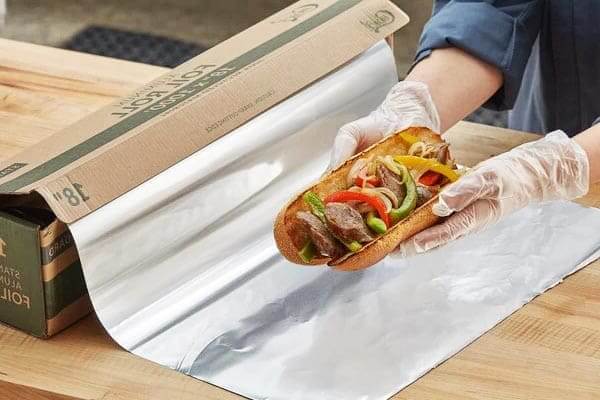
Household 8011 H34 Aluminum Foil Roll for Food
Food Packaging and Storage
- Wrapping leftovers and prepared meals: 8011 H34 foil provides a secure barrier against air and moisture, significantly extending the shelf life of perishable foods.
- Covering containers: It prevents contamination from dust, insects, or other environmental factors.
- Refrigeration and freezing: The foil maintains temperature stability, reducing freezer burn and moisture loss in frozen foods.
- Marination and storage of raw ingredients: Its chemical stability ensures safe contact with meats, vegetables, and dairy products without altering flavor or quality.
Cooking and Baking
- Oven and grill use: Foil acts as a liner or wrapper, providing even heat distribution and preventing direct contact with flames or baking trays.
- Moisture retention: Enclosing food in foil locks in natural juices, improving texture and flavor in baked or roasted dishes.
- Shielding and browning control: Partial coverage prevents over-browning or charring of delicate surfaces like fish fillets or pastry tops.
- Steaming and en papillote cooking: Creates a sealed environment for healthy cooking with minimal oil or liquid.
Household Tasks and DIY Uses
- Temporary insulation: Foil can reflect heat for small-scale household insulation projects, such as around water pipes or radiators.
- Metal polishing and surface protection: Acts as a non-abrasive scrub for stainless steel or silver, and protects surfaces during painting or cleaning.
- Crafts and creative projects: Used in art, origami, and home decoration due to its pliability and shiny finish.
- Covering surfaces during repairs: Shields countertops, shelves, or appliances from dust, paint, or adhesives during DIY work.
Commercial and Catering Applications
- Food wrapping for take-away or delivery: Maintains hygiene and temperature, preserving food quality during transport.
- Tray and dish lining: Prevents sticking and simplifies cleaning for catering services or buffet setups.
- Portion packaging in institutional kitchens: Divides large batches into manageable servings, maintaining freshness and facilitating storage.
Light Industrial and Technical Uses
- Moisture and vapor barriers: Acts as a temporary protective layer during packaging, shipping, or storage of sensitive materials.
- Thermal shielding: Reflects heat in small-scale industrial or laboratory setups.
- Protective covers: Shields delicate equipment, electronics, or materials from dust, moisture, and light exposure.

Light Industrial used 8011 H34 Aluminum Foil
Packaging, Specifications, and Customization
Household 8011 H34 aluminum foil rolls are designed to meet both performance and user convenience requirements.
Packaging, dimensions, and customization options are key factors that influence handling, storage, and suitability for household or commercial use.
Packaging Formats
- Core Rolls: Foil is wound onto paperboard or plastic cores to maintain shape and facilitate dispensing.
- Boxed Packaging: Cardboard boxes with integrated serrated edges allow safe cutting and neat storage.
- Shrink-Wrapped Multi-Rolls: Protects hygiene and prevents contamination during transport and retail display.
- Bulk or Industrial Rolls: Larger rolls for catering or commercial kitchens reduce the frequency of roll changes.
Specifications
Household 8011 H34 foil rolls are available in a wide range of standard specifications:
| Parameter | Typical Range | Notes |
|---|---|---|
| Width | 250 – 450 mm | Standard for household use; wider options for commercial purposes |
| Thickness | 9 – 25 μm | Thinner for everyday wrapping; thicker for heavy-duty applications |
| Roll Length | 5 – 300 m | Short rolls for kitchens; long rolls for commercial use |
| Core Diameter | 25 – 76 mm | Paperboard or plastic cores suitable for dispensers or machines |
Customization Options
- Thickness and Gauge: Tailored for lightweight wrapping or heavy-duty use.
- Width and Length: Adapted for specific kitchen appliances, trays, or industrial processes.
- Surface Finish: Smooth or embossed surfaces improve handling, reflectivity, or printing capability.
- Packaging and Branding: Custom-printed boxes or rolls for private-label products or promotional purposes.
- Special Cores: Reinforced or recyclable cores for improved durability and eco-friendly options.
Quality Standards and Inspection
Household 8011 H34 aluminum foil is typically manufactured and inspected according to internationally recognized standards for food contact and material performance:
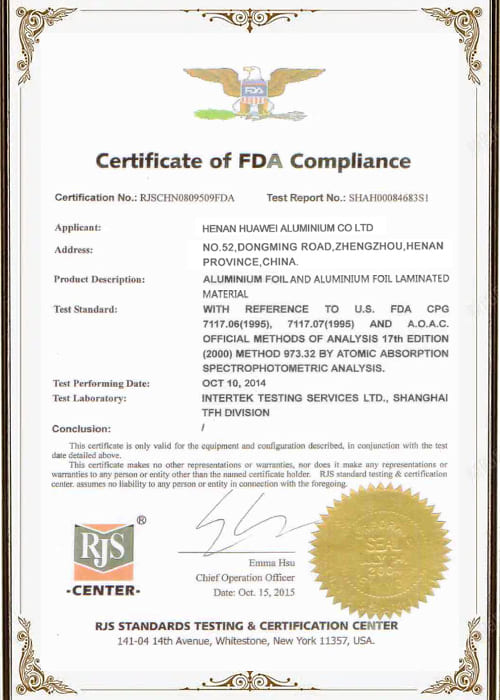
- FDA (U.S.): Compliant with 21 CFR 175.300 for materials intended for food contact, ensuring that foil does not transfer harmful substances to food.
- EU Regulations: Conforms to Regulation (EC) No. 1935/2004 and Regulation (EU) No. 10/2011 on food-contact materials.
- GB Standards (China): Complies with GB standards for aluminum foil used in food packaging, covering thickness, chemical composition, and hygiene.
- ISO 9001: Quality management systems ensure consistent production processes, traceability, and continuous improvement.
Comparative Analysis: 8011 H34 vs. Alternative Materials
| Material | Tensile Strength | Flexibility / Formability | Barrier Properties | Thermal Resistance | Food Safety | Recyclability / Sustainability | Typical Applications |
|---|---|---|---|---|---|---|---|
| 8011 H34 Aluminum Foil | 110–145 MPa | Moderate-high, good foldability | Excellent (moisture, oxygen, light, odors) | High (up to ~600°C short-term) | Excellent, FDA/EU compliant | 100% recyclable, low energy to recycle | Food wrapping, baking, grilling, storage, insulation |
| Plastic Wrap (PVC / PE) | Low (20–30 MPa) | High, very stretchable | Moderate (moisture barrier, limited gas barrier) | Low (~120°C max) | Good if food-grade, may contain additives | Limited recyclability, often single-use | Food covering, short-term storage, wrapping fresh produce |
| Parchment Paper | Moderate (~50–60 MPa) | Moderate, tear-resistant | Low (not moisture-proof) | Moderate (~220°C) | Excellent if uncoated | Biodegradable, compostable | Baking, lining trays, cooking, some storage |
| 1235 Aluminum Foil (O / H18 temper) | 100–120 MPa | High flexibility, softer than 8011 H34 | Excellent | High | Excellent | 100% recyclable | Household foil, wrapping, general packaging |
| Heavy-Duty Aluminum Foil (8011 thicker gauge) | 130–160 MPa | Moderate | Excellent | Very high | Excellent | 100% recyclable | Roasting, grilling, industrial kitchen use |
Conclusion
Household 8011 H34 aluminum foil roll remains a preferred solution due to its optimized composition, reliable mechanical properties, excellent barrier performance, and proven food safety.
While it has certain limitations, its advantages in durability, thermal performance, and recyclability make it indispensable in both domestic and commercial environments.
As consumer demand for sustainable, multi-functional household products grows, 8011 H34 aluminum foil remains indispensable.
Its future lies in innovation — such as antibacterial coatings, ultra-thin gauges for material savings, and eco-friendly packaging — while retaining its core advantages.
For users, selecting the right thickness (0.009–0.012mm for wrapping, 0.015–0.02mm for cooking) and following safety guidelines (avoiding microwave arcing, proper recycling) maximizes its utility and minimizes environmental impact.
In essence, 8011 H34 aluminum foil is more than a household staple: it is a testament to how material science can balance performance, safety, and sustainability for everyday use.
FAQs
Can household 8011 H34 aluminum foil be used in air fryers?
Yes. 8011 H34 foil withstands air fryer temperatures (typically 160–200℃, well below its 220℃ limit).
Use it to line the basket (prevents sticking) or wrap foods, but ensure:
(1) foil does not block air vents (critical for air circulation);
(2) no loose edges touch the heating element (fire risk);
(3) foods with sharp edges are lined with parchment paper to avoid punctures.
Is 8011 H34 foil safe for microwave use?
Safe when used correctly. Avoid:
(1) Wrinkled foil (causes arcing due to concentrated electric fields);
(2) contact with microwave walls/antenna;
(3) wrapping acidic/alkaline foods for >5 minutes (may accelerate aluminum migration).
For best results, use smooth, loose wraps (leave a small gap for steam release) or cover only part of the food.
How to properly recycle household 8011 H34 aluminum foil?
Follow three steps:
(1) Clean foil thoroughly (remove food residue, oil, or plastic lining — contaminated foil may be rejected);
(2) Ball up foil into a fist-sized bundle (small pieces fall through recycling machinery);
(3) Place in aluminum recycling bins (separate from plastic/paper).
Check local recycling programs — most accept clean foil.
Does 8011 H34 foil cause aluminum poisoning?
No. Under normal use, aluminum migration from 8011 H34 foil is negligible (≤5 mg/kg, per FDA limits), well below the WHO’s daily safe intake (40 mg for adults).
Risk only increases with prolonged contact (≥24 hours) with strong acids/alkalis or high-temperature fatty foods — avoid these scenarios.
Can 8011 H34 foil be reused?
Yes, if clean and undamaged. Reuse foil for non-food tasks (e.g., lining shelves, polishing metal) or food contact (e.g., wrapping bread, covering bowls) if it has no oil/stain residue.
Discard foil that is crumpled, punctured, or contaminated with strong acids/alkalis (risk of aluminum migration).
Why does 8011 H34 foil turn dark after use?
Darkening is harmless — it results from:
(1) Oxidation (thin Al₂O₃ layer forms at high temperatures, no impact on safety);
(2) Reaction with sulfur-containing foods (e.g., eggs, broccoli) forming aluminum sulfide (non-toxic).
Darkened foil can still be reused or recycled.